As in years past, I’ve compiled a list of the best games I played in 2014. While some might say 2014 was a slump year for gaming, I felt the case was quite the opposite – granted, some of the titles on this list were not released in this year, but a large chunk of the titles I played this year were released in a window between late 2013 through 2014. In each year prior to this one, I narrowed my ‘games of the year’ down to a select five. However, I felt that doing so this year would serve a great injustice to many of the titles I found to be simply exceptional this year. As such, this year’s list will consist of the ten best games I played in 2014, and will be split into two parts. Keep in mind that the order of these games on this list is not necessarily representative of the score I gave each of them in my reviews, rather a ranking based on which games were the most enjoyable and impressed me the most.
#5) Super Smash Bros. for 3DS and Wii U: As a pair, these two new Smash Bros. titles might just be my new favorites in Nintendo’s all-star fighting franchise. The Wii U version offers a wider variety of game modes, many of them fast-paced, and while the 3DS’ controls might hold a little less appeal in the longterm, the handheld version’s classic mode is more in line with that of previous Smash installments. The roster includes some curious characters, each of whom makes use of highly inventive movesets and feels right at home with the veteran characters. Coupling that with the intelligent repurposing of final smashes, these two latest titles offer up the most balanced fighting frenzy Smash Bros. has seen since its N64 debut.
#4) Bayonetta 2: One of the smoothest-playing action games I’ve ever had the pleasure of getting my hands on, Bayonetta 2 is equally impressive in its visual presentation. It’s easily one of the most graphically impressive games on the market right now, and the polar opposite designs of statuesque Angels and mechanical Demons provides a great variety of designs to coincide with their various attack and defense patterns. Bayonetta 2 is thoroughly unapologetic, in both its demanding combo system of close encounters and pinpoint-accuracy dodging, as well as its sense of flash and flair, which, much like its very vocal and very confident protagonist, it owns and flaunts in every possible angle.
#3) Skullgirls Encore: I’ve never been one to claim I’m particularly skilled at popular combo-heavy fighting games like Street Fighter or Mortal Kombat, but Skullgirls was something of a game-changer for me. It is designed with the hardcore fighting game crowd in mind, but somehow opens up to a wider audience with tutorials and combo chains that prove far more intuitive than heavyweights of the genre typically offer. While the default character roster may be smaller than in most fighting games, each character is designed with a very specific play style in mind, and with more DLC characters on the way, fights are bound to push forth more complex team strategies and fast-paced action as they are added to the lineup. The hand-drawn character models are absolutely gorgeous, and a further testament to the love of labor that the creative team behind Skullgirls has poured into this magnificent creation.
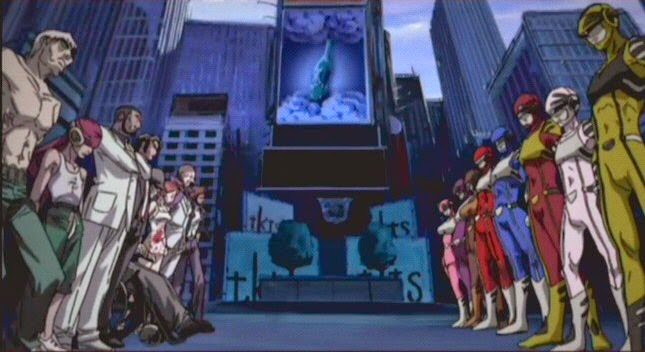
#2) Killer7: It’s no secret that I love the utterly bizarre creations of Suda51 and the team at Grasshopper Manufacture, and Killer7 is no exception. Polar opposite in themes and presentation to No More Heroes, Killer7 is a dark and serious tale, albeit an incredibly weird one, that weaves political intrigue, a terrorist organization that mutates its loyalists into walking time-bombs, the personas of multiple assassins given corporeal form, and heavily cel-shaded graphics into one effectively perfect gaming experience. Of all the aspects of Killer7 I found myself simply in awe of, it was the fact that – despite its unorthodox combination of on-rails progression, third-person action, first-person shooting, and character-specific puzzles – I was unable to find any noteworthy flaws in the design or mechanics of this game.
#1) Shovel Knight: Shovel Knight is a case of David holding his own with the Goliaths of the gaming industry, an indie title that shows as much love and polish, if not more, than most of its AAA-title competitors. It’s a love song to NES-era icons like Mega Man, Zelda, Castlevania, and Final Fantasy, and yet is able to craft its own identity that feels right at home in the company of Nintendo’s long-since-famous mascots. Shovel Knight is not a cakewalk of a game, by any means, but its smooth controls and wacky items prove a wonderful pairing to the game’s 8-bit aesthetic. Shovel Knight is great for its classic fantasy vibe, its comedic cast, and its addictive gameplay that is great for both brief sessions on the go, or a long haul of taking down the nefarious Order of No Quarter.
.
Showing posts with label Killer 7. Show all posts
Tuesday, December 23, 2014
Thursday, December 18, 2014
2014 Year in Review: Video Games
As this year comes to a close, I am wrapping up my ‘year in review’ lists, including my top anime and video game picks for 2014. Below is a list of every video game in the order that I played them this year, complete with a brief summary of my full review and the final score I provided each. Keep an eye out for my picks of the top ten video games of the year later this month, and please note that this list will be updated within the next week or so to account for my review of Pokémon: Omega Ruby and Alpha Sapphire.
Grand Theft Auto V – Blending action-packed heists with parodies of contemporary culture in a setting as true to the west coast as possible, GTA V never seems to stop dealing out entertainment, whether from its cleverly-scripted story of three crooks in over their heads, or simply driving freely across the massive expanse of forests, desert, and bustling city streets. There is so much to do and see, it’s truly baffling that the game runs so seamlessly, not only in its load times, but in the way it develops each character and shapes the grand plot. While many games of this genre sacrifice quality for quantity, GTA V still looks quite visually impressive for a late seventh generation console release, and the myriad of alternative, electronic, and classic rock tunes add some welcome flavor to the depiction of Los Santos. My rating: 9.25
Super Mario 3D World – The follow-up to the 3DS’ Super Mario 3D Land, this Wii U platformer sticks to the 2D/3D hybrid design, and features levels that are much shorter than most Mario games would offer. That said, the game looks gorgeous, and offers plenty of variety and replayability, with drop-in/drop-out multiplayer, secret areas abound, and an extra challenge from post-game bonus stages. The Cat Suit, while fun for a while, overshadows many of the other more interesting items, which could have been more consistently utilized. My rating: 8
DmC: Devil May Cry – A new vision of one of the biggest action gaming series out there, DmC sports a new punky, foul-mouthed Dante as he pairs with his more calm and collected brother Vergil to free the humans of the city of Limbo from the influence of the demon Mundus. Everything has been given a gritty, yet colorful look, with Dante smashing and hacking apart grotesque statue-like enemies in environments that draw heavy inspiration from modern eastern European urban areas. The dialogue is cheesy, no doubt, and the story over a bit more quickly than it could have been, but it is unquestionably the smoothest-playing entry in the Devil May Cry franchise, and plenty of fun to boot. My rating: 9.25
DLC
- Vergil’s Downfall: 6.75
The Legend of Zelda: A Link Between Worlds – Attempting to build upon the foundation laid by what is easily one of the most popular Zelda titles is a gutsy feat, and A Link Between Worlds displays how to go about delivering the bare minimum to fans of the series. Selling itself entirely on nostalgia, A Link Between Worlds rips almost everything in its overworld directly from the SNES classic, while showing a general lack of inspiration in the boss and dungeon layouts - these can be challenged in any order, but the tradeoff for such open-ended adventuring is that the difficulty factor peaks within the first two hours of gameplay. The story is bland, the characters generally uninteresting, and the whole package simply a lazy offering for what is one of the most renowned series in adventure gaming today. My rating: 6.5
Killer7 – A cel-shaded hybrid of multiple gaming genres, Killer7 conveys the bold and bizarre ideas that culminated from Suda51 and Shinji Mikami’s brains, albeit in a much different light than the action/comedy seen in Grasshopper Manufacture’s other modern masterpiece, No More Heroes. In a not-too-distant future, six assassins and one liaison take on corporeal form and carry out missions on behalf of their host, Garcian Smith, and elderly man who was once an ace assassin. With political intrigue, science fiction, and psychological horror all mixed into a singular product, Killer7 is a game like no other. Its on-rails control scheme and emphasis on solving puzzles while seeking out and dispatching invisible walking time bomb enemies may sound both a convoluted and repetitive process, but the unique abilities of each assassin continue to offer up new spins on familiar gameplay elements up until the very end. My rating: 10
Kirby: Triple Deluxe – While the 3D effects do well to explore new creativity in level design and the signature simplistic combat the series is known for, the real surprise in Kirby: Triple Deluxe is the degree to which the game utilizes the 3DS’ internal gyroscope, requiring players to tilt their systems back and forth to overcome puzzles within the varied environments. At its core, Triple Deluxe is a familiar path for longtime fans of the series, but the new power-ups and unexpected spins on boss encounters add an air of newness to this latest Kirby title, as well as a welcome (though not overly intense) challenge. Despite being a bit on the short side and hosting a story that is even more simplistic than that of many of its predecessors, Triple Deluxe is a wonderfully polished experience that emphasizes a ‘fun factor’ through every facet of its design. My rating: 9.25
Mario Kart 8 – Introducing zero-gravity segments to the Mario Kart series, number eight is quite a far cry from where it started back on the SNES, and yet, it could not play more smoothly. A few new items adjust the ‘rubber band’ balancing issues many players had with some of the recent installments, while the Grand Prix mode provides both fun and inventive new locales as well as flat-out gorgeous reimaginings of retro tracks. The one major drawback that Mario Kart 8 faces is that its battle mode has been relegated to the race tracks themselves, and lacks any proper battle arenas, effectively nullifying the enjoyment of that bonus game mode. My rating: 8
DLC
- The Legend of Zelda x Mario Kart 8: 8
LEGO Marvel Superheroes – A love letter to fans of Marvel’s comics and films, this LEGO version of Manhattan incorporates a ludicrous number of heroes and villains, from the iconic Iron Man, Wolverine, Thor, and Captain America, to less mainstream and sometimes oddball picks like Taskmaster, Black Bolt, Super Skrull, and M.O.D.O.K. There’s plenty of distractions in the form of races and combat challenges, both in New York City and on board the S.H.I.E.L.D. Helicarrier stationed overhead. It’s a fun story that does well to aim itself at younger players and older fans alike, and isn’t afraid to poke fun at itself, with members of the Avengers commenting on how silly some of their foes plans are. My rating: 8.25
Shovel Knight – A brilliant homage to NES icons like The Legend of Zelda, Mega Man, Castlevania, and Final Fantasy, Shovel Knight conveys charm in its 8-bit aesthetic while offering smooth platforming action controls more appropriate for a 2014 release. The crew at Yacht Club games has done a masterful job in balancing fun elements with a fair but challenging degree of trial-and-error routines. The quirky and colorful villains of the Order of No Quarter are a humorous and memorable lot, and though it may not be as long a quest as many major retail releases this year, Shovel Knight offers up plenty of variety and replayability via its StreetPass arena, wandering warriors, and bonus challenge stages. My rating: 8.75
The Wolf Among Us – Hot off the heels of their success with the first season of The Walking Dead video game, Telltale Games has opted to take on the more fantastical and magic-oriented realm of the Fables comics. As Sherriff Bigby Wolf, you must search for clues regarding the death of one of the Fables now living in Fabletown, New York. It quickly becomes apparent that there are larger motives at play, and that Bigby will have to pay attention to the finest of details if he is to bring the case to justice. Favoring clue hunting and quick-time prompted action sequences, The Wolf Among Us is as much an ‘interactive story’ as it predecessor, not controlling in a manner typical to most video games in this day and age. Still, its cel-shaded styling is distinct, its storytelling generally solid and engaging, and its characters all decently developed by the time the final chapter comes to a close. My rating: 7.5
Skullgirls Encore – Designed with fighting game fans in mind, Skullgirls is surprisingly accessible to those lacking an intimate history with genre mainstays like Mortal Kombat or Street Fighter. While the nearly-all-female cast conveys a curious charm with their designs all being inspired by monster movies and horror fiction, the most impressive feat Skullgirls pulls off – aside from its buttery-smooth gameplay – is the fact that every single character is animated by hand, a design choice unheard of in today’s industry. Though the roster may not be as large as other fighting games, each character is designed with specialized playstyles in mind that fit major staples of the genre while adding a little bit of a different flair to the mix. Story modes are rarely the highlight of any arcade style combo-fest, yet Skullgirls handles its world and characters in such a way that will leave players wanting more when the single player modes have been conquered – and with more DLC characters on the way, one can only be excited for what lies ahead. My rating: 9.25
Metal Gear Solid V: Ground Zeroes – A glorified demo of what is planned for the next proper numbered installment in the MGS series, Ground Zeroes has Snake running around a small camp in search of his former Peace Walker comrades Chico and Paz. The story is far too short and simple for player to care about, and lacks any real semblance to a proper Metal Gear tale. Likewise, the gameplay has been dulled across the board to grant mainstream gamers ease of access, which in turn effectively robs the entire experience of the Metal Gear spirit. My rating: 4.5
Donkey Kong Country Returns 3D – A port of the Wii’s recent resurrection of DK’s platforming adventures, this game is riddled with many worlds and stages to explore, each with secret areas and bonus collectibles. Aside from a few upgrades courtesy of Cranky Kong’s shop, the gameplay is rather straightforward, asking that players progress to the end of the stage while stomping and rolling on enemy wildlife that have been possessed by resident villain tiki masks. The emphasis on twitch-memorization movement drags down the fun factor in later worlds, however, as the game is effectively asking you to go through the motions in a very specific pattern as opposed to throwing any real learning curve at you or asking you to strategize with experience. My rating: 6.5
Sin and Punishment: Star Successor – Letting up on the difficulty factor from its predecessor, this Wii sequel offers greater creativity in both enemy and environment designs. More general science fiction, the cyberpunk aesthetic is still at play in Star Successor, though not as heavily as in the original Sin and Punishment. The story of Isa and Kachi running from the Nebulox forces is light, but this is a game that is more about fine-tuned arcade-style action gameplay than it is about a gripping story, and to that end, Star Successor does a fine job of continuing the cult-following legacy of Sin and Punishment. My rating: 8
Kid Icarus: Uprising – Part on-rails shooter, part action-adventure game, Kid Icarus: Uprising is a bold reimagining of a long-dormant Nintendo property that doesn’t take itself too seriously, poking fun not only at the previous Kid Icarus titles, but also Nintendo’s long history of iconic video game characters and creations. With Hades pulling the strings behind a grand bid at expanding his forces from the Underworld into the realm of the living, Palutena calls upon her most trusted Angel Pit to seek out ancient artifacts and take up the mantle of unlikely savior. Along the way, Pit will become sidetracked as he squares off with the Forces of Nature and beings from beyond the Earth, all of which bear beautiful, highly-detailed designs fitting of the classic Greek and Roman influences the series is known for. My rating: 9.25
Persona 4 – Designed in the vein of old-school JRPGs, but incorporating modern sensibilities to its design, gameplay, and story, Persona 4 follows a group of classmates/friends as they try to unravel the mysteries surrounding a series of murders and the television world of the Midnight Channel. The party members are, by and large, a genuinely entertaining lot, which is just as well, considering how much time will be spent in their company, both while scouring dungeons for experience points and treasure, and during your free time in town and at school as you forge stronger social links to increases their combat capabilities. The symbols of the arcana that you choose to pursue will influence the types of Personas you are able to fuse and summon, and taking on a local job or after-school activity will boost personal stats. The dungeons each hold an aesthetic unique to the characters they correlate to, though the endgame stretch streamlines everything into a suddenly straightforward and deflated experience compared to everything that preceded it. My rating: 8.75
Hyrule Warriors – A hack-and-slash spinoff in the vein of Dynasty Warriors, this is certainly one strange but not unwelcome combination of franchises. While the core mechanics are more in line with the DW combat system, the incorporation of classic items like the Bow, Bombs, Hookshot, and more give Hyrule Warriors a flavor just different enough to identify it as its own beast. The story may be light, but the game offer plenty of missions between its three core modes of gameplay, and a reasonable amount of depth in upgrading character stats and weapon bonuses. As a whole, it may not be as strong as most Zelda titles, but it does well to cater to longtime fans of the series, while refining many elements carried over from Dynasty Warriors. My rating: 8.25
Super Smash Bros. for 3DS – Overpowered characters from the series’ last outing on the Wii have been toned down in favor of greater balance across the board, while final smash moves have similarly been evened out for the better. Classic mode grants players freedom to select from one of three matches before each encounter, throwing metal, giant, and horde battles into the mix, and offering greater rewards at higher difficulty settings, while the time-sensitive gathering of stat boosts in Smash Run is, in stark comparison, a largely forgettable portion of the handheld Smash experience. 3D effects are used for little more than added depth perception, which is just as well, given the often chaotic nature of fights, and players who find it difficult to keep track of their fighter on screen can increases the thickness on the outline of their character model – the renders of which, along with the environments and collectible trophies, look exceptional on the small screen. My rating: 9.25
Bayonetta 2 – Pairing silky smooth gameplay with an unapologetic sense of flair that many other action games strive to achieve but few actually manage to do, Bayonetta 2 is not only one of the best showings in its genre, it is one of the best games of this eighth generation of consoles. With wacky humor, battles that constantly escalate in scale and ridiculousness, and a protagonist that commands with every backflip and shot from her pistols, Bayonetta 2 is not just an absolute visual treat, it’s a no-holds-barred wild ride from start to finish. The majestic soundtrack, bonus levels, and Nintendo easter eggs only add to this utterly delicious package. My rating: 9.75
Super Smash Bros. for Wii U – While Smash Bros. does well on the 3DS, it feels properly at home on the Wii U, with tight controls and the ability to enter (admittedly chaotic and fast-paced) 8-player bouts. There’s an abundance of modes represented in this new home console Smash Bros., and even more in the way of unlockables. While Classic mode does break from its traditional patterns a bit, the roster of playable fighters is top-notch, and easily the most diverse and balanced group the series has seen in years. The returning stages may not boast as strong of a showing as on the 3DS, but the new stages for this Wii U counterpart are a strong showing, by and large, and pair well with the move away from Brawl’s gimmicky gameplay and design elements. My rating: 9.25
Pokemon: Omega Ruby and Alpha Sapphire – While generation III did well during its original Gameboy Advance release to introduce plenty of new and interesting typing combos that proved both enjoyable and useful in the long run, this pair of 3DS remakes only adds so much to the formula. Some new features from the Pokenav aid in catching specific Pokémon in the wild, while the experience share system carried over from last year’s Pokémon X and Y lead your party members to reach much higher levels than necessary shortly after the halfway point of the journey through the now fully-3D Hoenn region. The bonus post-game Delta Episode content is easily among the highlights of the game, and makes up for many of missteps encountered during the core story of Team Magma and Team Aqua. A lack of new offerings, combined with the generally less-inspired layout of the Hoenn region when compared to its brethren in the franchise, lead Omega Ruby and Alpha Sapphire to be less impressive than what most fans have come to expect in the overall quality of Pokémon titles. My rating: 7
Grand Theft Auto V – Blending action-packed heists with parodies of contemporary culture in a setting as true to the west coast as possible, GTA V never seems to stop dealing out entertainment, whether from its cleverly-scripted story of three crooks in over their heads, or simply driving freely across the massive expanse of forests, desert, and bustling city streets. There is so much to do and see, it’s truly baffling that the game runs so seamlessly, not only in its load times, but in the way it develops each character and shapes the grand plot. While many games of this genre sacrifice quality for quantity, GTA V still looks quite visually impressive for a late seventh generation console release, and the myriad of alternative, electronic, and classic rock tunes add some welcome flavor to the depiction of Los Santos. My rating: 9.25
Super Mario 3D World – The follow-up to the 3DS’ Super Mario 3D Land, this Wii U platformer sticks to the 2D/3D hybrid design, and features levels that are much shorter than most Mario games would offer. That said, the game looks gorgeous, and offers plenty of variety and replayability, with drop-in/drop-out multiplayer, secret areas abound, and an extra challenge from post-game bonus stages. The Cat Suit, while fun for a while, overshadows many of the other more interesting items, which could have been more consistently utilized. My rating: 8
DmC: Devil May Cry – A new vision of one of the biggest action gaming series out there, DmC sports a new punky, foul-mouthed Dante as he pairs with his more calm and collected brother Vergil to free the humans of the city of Limbo from the influence of the demon Mundus. Everything has been given a gritty, yet colorful look, with Dante smashing and hacking apart grotesque statue-like enemies in environments that draw heavy inspiration from modern eastern European urban areas. The dialogue is cheesy, no doubt, and the story over a bit more quickly than it could have been, but it is unquestionably the smoothest-playing entry in the Devil May Cry franchise, and plenty of fun to boot. My rating: 9.25
DLC
- Vergil’s Downfall: 6.75
The Legend of Zelda: A Link Between Worlds – Attempting to build upon the foundation laid by what is easily one of the most popular Zelda titles is a gutsy feat, and A Link Between Worlds displays how to go about delivering the bare minimum to fans of the series. Selling itself entirely on nostalgia, A Link Between Worlds rips almost everything in its overworld directly from the SNES classic, while showing a general lack of inspiration in the boss and dungeon layouts - these can be challenged in any order, but the tradeoff for such open-ended adventuring is that the difficulty factor peaks within the first two hours of gameplay. The story is bland, the characters generally uninteresting, and the whole package simply a lazy offering for what is one of the most renowned series in adventure gaming today. My rating: 6.5
Killer7 – A cel-shaded hybrid of multiple gaming genres, Killer7 conveys the bold and bizarre ideas that culminated from Suda51 and Shinji Mikami’s brains, albeit in a much different light than the action/comedy seen in Grasshopper Manufacture’s other modern masterpiece, No More Heroes. In a not-too-distant future, six assassins and one liaison take on corporeal form and carry out missions on behalf of their host, Garcian Smith, and elderly man who was once an ace assassin. With political intrigue, science fiction, and psychological horror all mixed into a singular product, Killer7 is a game like no other. Its on-rails control scheme and emphasis on solving puzzles while seeking out and dispatching invisible walking time bomb enemies may sound both a convoluted and repetitive process, but the unique abilities of each assassin continue to offer up new spins on familiar gameplay elements up until the very end. My rating: 10
Kirby: Triple Deluxe – While the 3D effects do well to explore new creativity in level design and the signature simplistic combat the series is known for, the real surprise in Kirby: Triple Deluxe is the degree to which the game utilizes the 3DS’ internal gyroscope, requiring players to tilt their systems back and forth to overcome puzzles within the varied environments. At its core, Triple Deluxe is a familiar path for longtime fans of the series, but the new power-ups and unexpected spins on boss encounters add an air of newness to this latest Kirby title, as well as a welcome (though not overly intense) challenge. Despite being a bit on the short side and hosting a story that is even more simplistic than that of many of its predecessors, Triple Deluxe is a wonderfully polished experience that emphasizes a ‘fun factor’ through every facet of its design. My rating: 9.25
Mario Kart 8 – Introducing zero-gravity segments to the Mario Kart series, number eight is quite a far cry from where it started back on the SNES, and yet, it could not play more smoothly. A few new items adjust the ‘rubber band’ balancing issues many players had with some of the recent installments, while the Grand Prix mode provides both fun and inventive new locales as well as flat-out gorgeous reimaginings of retro tracks. The one major drawback that Mario Kart 8 faces is that its battle mode has been relegated to the race tracks themselves, and lacks any proper battle arenas, effectively nullifying the enjoyment of that bonus game mode. My rating: 8
DLC
- The Legend of Zelda x Mario Kart 8: 8
LEGO Marvel Superheroes – A love letter to fans of Marvel’s comics and films, this LEGO version of Manhattan incorporates a ludicrous number of heroes and villains, from the iconic Iron Man, Wolverine, Thor, and Captain America, to less mainstream and sometimes oddball picks like Taskmaster, Black Bolt, Super Skrull, and M.O.D.O.K. There’s plenty of distractions in the form of races and combat challenges, both in New York City and on board the S.H.I.E.L.D. Helicarrier stationed overhead. It’s a fun story that does well to aim itself at younger players and older fans alike, and isn’t afraid to poke fun at itself, with members of the Avengers commenting on how silly some of their foes plans are. My rating: 8.25
Shovel Knight – A brilliant homage to NES icons like The Legend of Zelda, Mega Man, Castlevania, and Final Fantasy, Shovel Knight conveys charm in its 8-bit aesthetic while offering smooth platforming action controls more appropriate for a 2014 release. The crew at Yacht Club games has done a masterful job in balancing fun elements with a fair but challenging degree of trial-and-error routines. The quirky and colorful villains of the Order of No Quarter are a humorous and memorable lot, and though it may not be as long a quest as many major retail releases this year, Shovel Knight offers up plenty of variety and replayability via its StreetPass arena, wandering warriors, and bonus challenge stages. My rating: 8.75
The Wolf Among Us – Hot off the heels of their success with the first season of The Walking Dead video game, Telltale Games has opted to take on the more fantastical and magic-oriented realm of the Fables comics. As Sherriff Bigby Wolf, you must search for clues regarding the death of one of the Fables now living in Fabletown, New York. It quickly becomes apparent that there are larger motives at play, and that Bigby will have to pay attention to the finest of details if he is to bring the case to justice. Favoring clue hunting and quick-time prompted action sequences, The Wolf Among Us is as much an ‘interactive story’ as it predecessor, not controlling in a manner typical to most video games in this day and age. Still, its cel-shaded styling is distinct, its storytelling generally solid and engaging, and its characters all decently developed by the time the final chapter comes to a close. My rating: 7.5
Skullgirls Encore – Designed with fighting game fans in mind, Skullgirls is surprisingly accessible to those lacking an intimate history with genre mainstays like Mortal Kombat or Street Fighter. While the nearly-all-female cast conveys a curious charm with their designs all being inspired by monster movies and horror fiction, the most impressive feat Skullgirls pulls off – aside from its buttery-smooth gameplay – is the fact that every single character is animated by hand, a design choice unheard of in today’s industry. Though the roster may not be as large as other fighting games, each character is designed with specialized playstyles in mind that fit major staples of the genre while adding a little bit of a different flair to the mix. Story modes are rarely the highlight of any arcade style combo-fest, yet Skullgirls handles its world and characters in such a way that will leave players wanting more when the single player modes have been conquered – and with more DLC characters on the way, one can only be excited for what lies ahead. My rating: 9.25
Metal Gear Solid V: Ground Zeroes – A glorified demo of what is planned for the next proper numbered installment in the MGS series, Ground Zeroes has Snake running around a small camp in search of his former Peace Walker comrades Chico and Paz. The story is far too short and simple for player to care about, and lacks any real semblance to a proper Metal Gear tale. Likewise, the gameplay has been dulled across the board to grant mainstream gamers ease of access, which in turn effectively robs the entire experience of the Metal Gear spirit. My rating: 4.5
Donkey Kong Country Returns 3D – A port of the Wii’s recent resurrection of DK’s platforming adventures, this game is riddled with many worlds and stages to explore, each with secret areas and bonus collectibles. Aside from a few upgrades courtesy of Cranky Kong’s shop, the gameplay is rather straightforward, asking that players progress to the end of the stage while stomping and rolling on enemy wildlife that have been possessed by resident villain tiki masks. The emphasis on twitch-memorization movement drags down the fun factor in later worlds, however, as the game is effectively asking you to go through the motions in a very specific pattern as opposed to throwing any real learning curve at you or asking you to strategize with experience. My rating: 6.5
Sin and Punishment: Star Successor – Letting up on the difficulty factor from its predecessor, this Wii sequel offers greater creativity in both enemy and environment designs. More general science fiction, the cyberpunk aesthetic is still at play in Star Successor, though not as heavily as in the original Sin and Punishment. The story of Isa and Kachi running from the Nebulox forces is light, but this is a game that is more about fine-tuned arcade-style action gameplay than it is about a gripping story, and to that end, Star Successor does a fine job of continuing the cult-following legacy of Sin and Punishment. My rating: 8
Kid Icarus: Uprising – Part on-rails shooter, part action-adventure game, Kid Icarus: Uprising is a bold reimagining of a long-dormant Nintendo property that doesn’t take itself too seriously, poking fun not only at the previous Kid Icarus titles, but also Nintendo’s long history of iconic video game characters and creations. With Hades pulling the strings behind a grand bid at expanding his forces from the Underworld into the realm of the living, Palutena calls upon her most trusted Angel Pit to seek out ancient artifacts and take up the mantle of unlikely savior. Along the way, Pit will become sidetracked as he squares off with the Forces of Nature and beings from beyond the Earth, all of which bear beautiful, highly-detailed designs fitting of the classic Greek and Roman influences the series is known for. My rating: 9.25
Persona 4 – Designed in the vein of old-school JRPGs, but incorporating modern sensibilities to its design, gameplay, and story, Persona 4 follows a group of classmates/friends as they try to unravel the mysteries surrounding a series of murders and the television world of the Midnight Channel. The party members are, by and large, a genuinely entertaining lot, which is just as well, considering how much time will be spent in their company, both while scouring dungeons for experience points and treasure, and during your free time in town and at school as you forge stronger social links to increases their combat capabilities. The symbols of the arcana that you choose to pursue will influence the types of Personas you are able to fuse and summon, and taking on a local job or after-school activity will boost personal stats. The dungeons each hold an aesthetic unique to the characters they correlate to, though the endgame stretch streamlines everything into a suddenly straightforward and deflated experience compared to everything that preceded it. My rating: 8.75
Hyrule Warriors – A hack-and-slash spinoff in the vein of Dynasty Warriors, this is certainly one strange but not unwelcome combination of franchises. While the core mechanics are more in line with the DW combat system, the incorporation of classic items like the Bow, Bombs, Hookshot, and more give Hyrule Warriors a flavor just different enough to identify it as its own beast. The story may be light, but the game offer plenty of missions between its three core modes of gameplay, and a reasonable amount of depth in upgrading character stats and weapon bonuses. As a whole, it may not be as strong as most Zelda titles, but it does well to cater to longtime fans of the series, while refining many elements carried over from Dynasty Warriors. My rating: 8.25
Super Smash Bros. for 3DS – Overpowered characters from the series’ last outing on the Wii have been toned down in favor of greater balance across the board, while final smash moves have similarly been evened out for the better. Classic mode grants players freedom to select from one of three matches before each encounter, throwing metal, giant, and horde battles into the mix, and offering greater rewards at higher difficulty settings, while the time-sensitive gathering of stat boosts in Smash Run is, in stark comparison, a largely forgettable portion of the handheld Smash experience. 3D effects are used for little more than added depth perception, which is just as well, given the often chaotic nature of fights, and players who find it difficult to keep track of their fighter on screen can increases the thickness on the outline of their character model – the renders of which, along with the environments and collectible trophies, look exceptional on the small screen. My rating: 9.25
Bayonetta 2 – Pairing silky smooth gameplay with an unapologetic sense of flair that many other action games strive to achieve but few actually manage to do, Bayonetta 2 is not only one of the best showings in its genre, it is one of the best games of this eighth generation of consoles. With wacky humor, battles that constantly escalate in scale and ridiculousness, and a protagonist that commands with every backflip and shot from her pistols, Bayonetta 2 is not just an absolute visual treat, it’s a no-holds-barred wild ride from start to finish. The majestic soundtrack, bonus levels, and Nintendo easter eggs only add to this utterly delicious package. My rating: 9.75
Super Smash Bros. for Wii U – While Smash Bros. does well on the 3DS, it feels properly at home on the Wii U, with tight controls and the ability to enter (admittedly chaotic and fast-paced) 8-player bouts. There’s an abundance of modes represented in this new home console Smash Bros., and even more in the way of unlockables. While Classic mode does break from its traditional patterns a bit, the roster of playable fighters is top-notch, and easily the most diverse and balanced group the series has seen in years. The returning stages may not boast as strong of a showing as on the 3DS, but the new stages for this Wii U counterpart are a strong showing, by and large, and pair well with the move away from Brawl’s gimmicky gameplay and design elements. My rating: 9.25
Pokemon: Omega Ruby and Alpha Sapphire – While generation III did well during its original Gameboy Advance release to introduce plenty of new and interesting typing combos that proved both enjoyable and useful in the long run, this pair of 3DS remakes only adds so much to the formula. Some new features from the Pokenav aid in catching specific Pokémon in the wild, while the experience share system carried over from last year’s Pokémon X and Y lead your party members to reach much higher levels than necessary shortly after the halfway point of the journey through the now fully-3D Hoenn region. The bonus post-game Delta Episode content is easily among the highlights of the game, and makes up for many of missteps encountered during the core story of Team Magma and Team Aqua. A lack of new offerings, combined with the generally less-inspired layout of the Hoenn region when compared to its brethren in the franchise, lead Omega Ruby and Alpha Sapphire to be less impressive than what most fans have come to expect in the overall quality of Pokémon titles. My rating: 7
Monday, May 26, 2014
Top five video games and anime of 2014 - Spring contenders
There have certainly been years past where I posted my predictions for my end of the year ‘top five’ contenders and many of the anime and video games I mentioned therein did not make the cut, so I suppose I ought to encourage you to take the following with a grain of salt. On the video game side of things, I feel that there is still plenty of room for variation, as some of the 2014 releases I am most excited for are not yet available (Watch Dogs, Ghost Song), while others may follow in the footsteps of Killer7 as older titles that I have not yet properly experienced. As far as the anime side of things is concerned, however, I anticipate that all of the titles mentioned below will end up on the top five list, unless some truly magnificent and mind-blowing release sneaks up on me later this year.
- Video Games –
Killer7 – Weird even by Suda51 standards, Killer7 is something of an antithesis to his Wii cult classic, No More Heroes, as it deals with a dark and serious story of six assassins given corporeal form by one aged Harman Smith, and their intermediary known as Garcian, all of whom are tasked with stopping the mutated walking time bombs known as Heaven’s Smiles and getting to the bottom of a global conspiracy. It’s a game that pays an insane attention to detail as it weaves as thinking man’s story, all the while presenting an odd yet surprisingly well-designed gameplay that combines on-rails shooting with action and puzzle elements, wrapped up in a hyper-cel-shaded package.
DmC: Devil May Cry – Admittedly, this reimagining of Dante and Vergil’s story is a bit on the short side, but what it lacks in length it makes up for with a grungy modern European art style and far and away the smoothest gameplay the series has seen yet. Dante is foul-mouthed, brash and impulsive, but an entertaining anti-hero nonetheless. The boss fights are quite nicely varied, and the demon and angel weapons as creative in design as they are fun to lay a smack-down with.
Grand Theft Auto V – The series that really brought sandbox gaming into the limelight, Grand Theft Auto’s fifth installment sees two men whose glory days have long since passed team up with a young up-and-coming hustler to revisit their criminal tendencies in a gaming world that truly pushes the limits and expectations of what modern gaming is all about. There is so much to see and do in GTA V, and while the heists are intense and thoroughly enjoyable to plan and execute, it is easy to find yourself spending hours on end exploring the metro of Los Santos, stealing cars, planes, ATVs, boats, shooting up rival gang members, purchasing properties for a weekly income, biking to the tops of mountains, taking a submarine to the depths of the bay, base jumping off a skyscraper, or any of the other multitude of activities available. It’s crazy just how much content is crammed into this single game, and even harder to believe just how smoothly it all runs.
- Anime -
Puella Magi Madoka Magica – One of the last genres I expected I would ever watch with such anticipation, Madoka takes the tropes of magical girl anime and turns them on their heads. It’s a dark tale, one that dares to be bold and original, one that dares to provide a practical yet interesting explanation for each plot point, one that dares to follow in the footsteps of Neon Genesis Evangelion without identifying too closely with the pseudo-mecha classic. And while the series does introduce a couple of plot points late in the story that seem a tad out of place, the overall product is a brilliant realization of a heavily-stylized story that gradually layers its relevant information, and one that kept me on the edge of my seat from start to finish.
Jojo’s Bizarre Adventure – I’m a bit late to the Jojo's party, I’ll admit, as the 2012 anime provided my first proper exposure to the long-running series. Still, its combination of wacky fighting styles, somewhat darker tone, and classic rock references make for a one-of-a-kind action comedy. Whether it is the first season’s lovable Joseph Joestar that lands the first season on my end-of-the-year top five list, or Stardust Crusaders' incorporation of Stands that secures the second season the title of the superior Jojo’s tale, I can almost guarantee that one season or the other will end up near the top of the stack for 2014.
Mobile Suit Gundam Unicorn – I’ve mentioned a number of times how much I appreciate the time and effort that has been put into this OVA, and while I’m sad to see it go, it has been one heck of a ride over the past couple of years, with each episode being at the quality of a theatrical release. The pacing is spot-on, the balance between mobile suit action scenes and exposition perfect. While it is true that I have yet to view the final episode before writing up a proper review on this, Unicorn Gundam would have to fall flat on its face to make me consider it anything less than one of the very best entries in the long-running franchise.
- Video Games –
Killer7 – Weird even by Suda51 standards, Killer7 is something of an antithesis to his Wii cult classic, No More Heroes, as it deals with a dark and serious story of six assassins given corporeal form by one aged Harman Smith, and their intermediary known as Garcian, all of whom are tasked with stopping the mutated walking time bombs known as Heaven’s Smiles and getting to the bottom of a global conspiracy. It’s a game that pays an insane attention to detail as it weaves as thinking man’s story, all the while presenting an odd yet surprisingly well-designed gameplay that combines on-rails shooting with action and puzzle elements, wrapped up in a hyper-cel-shaded package.
DmC: Devil May Cry – Admittedly, this reimagining of Dante and Vergil’s story is a bit on the short side, but what it lacks in length it makes up for with a grungy modern European art style and far and away the smoothest gameplay the series has seen yet. Dante is foul-mouthed, brash and impulsive, but an entertaining anti-hero nonetheless. The boss fights are quite nicely varied, and the demon and angel weapons as creative in design as they are fun to lay a smack-down with.
Grand Theft Auto V – The series that really brought sandbox gaming into the limelight, Grand Theft Auto’s fifth installment sees two men whose glory days have long since passed team up with a young up-and-coming hustler to revisit their criminal tendencies in a gaming world that truly pushes the limits and expectations of what modern gaming is all about. There is so much to see and do in GTA V, and while the heists are intense and thoroughly enjoyable to plan and execute, it is easy to find yourself spending hours on end exploring the metro of Los Santos, stealing cars, planes, ATVs, boats, shooting up rival gang members, purchasing properties for a weekly income, biking to the tops of mountains, taking a submarine to the depths of the bay, base jumping off a skyscraper, or any of the other multitude of activities available. It’s crazy just how much content is crammed into this single game, and even harder to believe just how smoothly it all runs.
- Anime -
Puella Magi Madoka Magica – One of the last genres I expected I would ever watch with such anticipation, Madoka takes the tropes of magical girl anime and turns them on their heads. It’s a dark tale, one that dares to be bold and original, one that dares to provide a practical yet interesting explanation for each plot point, one that dares to follow in the footsteps of Neon Genesis Evangelion without identifying too closely with the pseudo-mecha classic. And while the series does introduce a couple of plot points late in the story that seem a tad out of place, the overall product is a brilliant realization of a heavily-stylized story that gradually layers its relevant information, and one that kept me on the edge of my seat from start to finish.
Jojo’s Bizarre Adventure – I’m a bit late to the Jojo's party, I’ll admit, as the 2012 anime provided my first proper exposure to the long-running series. Still, its combination of wacky fighting styles, somewhat darker tone, and classic rock references make for a one-of-a-kind action comedy. Whether it is the first season’s lovable Joseph Joestar that lands the first season on my end-of-the-year top five list, or Stardust Crusaders' incorporation of Stands that secures the second season the title of the superior Jojo’s tale, I can almost guarantee that one season or the other will end up near the top of the stack for 2014.
Mobile Suit Gundam Unicorn – I’ve mentioned a number of times how much I appreciate the time and effort that has been put into this OVA, and while I’m sad to see it go, it has been one heck of a ride over the past couple of years, with each episode being at the quality of a theatrical release. The pacing is spot-on, the balance between mobile suit action scenes and exposition perfect. While it is true that I have yet to view the final episode before writing up a proper review on this, Unicorn Gundam would have to fall flat on its face to make me consider it anything less than one of the very best entries in the long-running franchise.
Saturday, May 3, 2014
Gamecube review: Killer7
You may have gathered from my many reviews of Suda51’s games that I am a huge fan of his work. Much as I love No More Heroes and its sequel, I was acutely aware of the fact that most Suda51 fans held Killer7 to just as high a caliber. I recall seeing promo content for Killer7 before it ever released on the Gamecube via Nintendo Power and various websites, but never had the chance to play it in proper until recently. Whereas No More Heroes is an unapologetic satire on the action game genre as well as the video game industry at large, Killer7 combines horror and action elements in an on-rails shooter that involves clever puzzles, requires quick thinking and fast reflexes, and boasts a curious brand of dark psychedelic flair.
The Smith Syndicate, otherwise known as the Killer7, is made up of – you guessed it – seven core members. Garcian Smith is liason between the six assassins and their master, Harman Smith. In the event that one of the six assassins – Kevin, Dan, Kaede, Mask, Con, or Coyote – is killed during a mission, Garcian can retrieve their remains and bring them back to life. The catch, however is that Garcian must retread their steps into enemy-filled territory. Thus is the big gamble with retrieving a dead Smith – Garcian cannot be upgraded, and in the event that a mission does not require use of the Smith in question’s unique abilities, it may be wise to simply carry on with the remaining members of the syndicate.
Blood is the currency of Killer7, and is used to heal during a mission, required to utilize the unique abilities of each of the Smiths, and can be exchanged for upgrade points to boost the stats of the Smiths. Each Smith has a different skill set, ranging from Con’s speed in both mobility and firing rate, to Kaede’s long-distance scoped pistol, to Kevin’s throwing knives which negate any need to reload. However, each Smith has an offset to prevent any single one from becoming more powerful than the others. Con’s defensive capacities are practically nonexistent, and though Mask deSmith is built like a tank, the spread of his grenade launchers results in his gathering a lower-quality blood far more often than not. Kaede and Mask’s unique abilities often reveal hidden messages and passageways respectively, and are most helpful in solving puzzles. Coyote and Kevin’s abilities are most frequently used to access new areas of the map, while Con’s ability to hear specific sounds and determine the correct path off those sees the least use. Dan’s ability to charge up one Collateral Shot in order to take out enemy spawn points is used sparingly, but is practical nonetheless.
The enemies that the Killer7 face at every turn are monstrous humanoids known as Heaven’s Smiles – effectively walking time bombs with abilities that vary from one mission to the next. If a Heaven’s Smile gets too close to one of the Smiths, it will detonate and chisel away a decent portion of their health bar. Some varieties of Heaven’s Smiles are slow but capable of taking many hits, others are stationary but notably more lethal as ‘turret’ units. Some of the more dangerous Heaven’s Smiles, encountered later in the game, are designed to race toward players before they have much time to devise a countering strategy. While the game never feels cheap or frustratingly difficult, it certainly demands a unique learning curve given its style of gameplay, and a trial-and-error pattern is key to taking down some of the game’s most lethal enemies.
These Heaven’s Smiles are the binds that tie everything together, plot-wise. At the outset, Harman has an encounter with an old acquaintance named Kun Lan. Kun Lan has acquired the means to offer ordinary citizens the chance at becoming Heaven’s Smiles, and furthering his terrorist routine. Swept up in the rivalry of these two old men are political officials representing Japan and the U.S., as well as other radical idealists like one Ulmeyda. It’s a melting pot of cleverly-scripted characters with colorful attitudes that lean more toward the practical and realistic given the scenario at large, as opposed to No More Heroes’ more crazy and eccentric residents. Even with the M-rating slapped on the box, it should be noted that Killer7 is a thinking man’s game – not just because of the logic-based puzzles, but because of the story and setting’s emphasis on more adult themes like modern terror tactics, cultist followings, irregularities in space-time, geopolitics, and moral ambiguity.
Much like the more recent Killer is Dead, Killer7 utilizes a hyper cel-shaded art style, wherein whites are borderline-glaringly bright, and shadows are nearly pitch black. The animations and details of each character model are incredibly well-rendered, however, so it is thankfully not a case of the art style trumping the care put into bringing the Smith Syndicate to life. The soundtrack incorporates a number of industrial and techno tunes to flesh out its near-future setting, while also adding a dash of rock and classical string sounds to the mix. Some of the cutscenes opt for a modern anime approach, while the majority deliver story segments in small doses of grungy 2D digital animation.
Kiler7 will run players about fifteen hours or so on their first playthrough. Some levels are more time-consuming than others, as they may require the Smith Syndicate to retrace their steps in order to complete a puzzle that was impossible to overcome at an earlier point. Others host considerably more enemies, leading players to have their triggers ready to go at a moment’s notice. But even the first introductory level lacks a linear design. There is never a set order in which players must overcome the various challenges of each mission, rather the ultimate goal is to retrieve all the required Soul Shells rewarded from mastering puzzles and exploring the environment. The game does mark each puzzle, Soul Shell, and point of interest on the map screen, making retreading one’s steps a less tedious process, though the game will never state outright what needs to be done at each location.
However, clues can be purchased for an adequate amount of blood from the ghostly figure of Yoon-Hyoon and his luchador mask. Similarly, the bondage jumpsuit-bound individual known as Iwazaru offers tidbits on local enemy tactics in any given locale. Arguably the most interesting of these phantoms is Travis Bell, a young man who knows perhaps more about the picture at large than any of the Smiths. His knowledge of the Japan-U.S. political affairs and the associates Garcian occasionally meets with makes him a key part of unraveling the grander story.
While the seven Smiths are merely faces with separate weapon sets at the start of Killer7, they each have their time in the spotlight, and by the game’s final hours, each will have a distinct and rounded identity. Some of the Smiths are explored in greater detail through letters and key items found within missions, forcing some digging on the part of players. Others, like Dan and Mask, have fully-scripted cutscenes allotted to them. Upon completing the main game, the grueling challenge of Killer8 is unlocked, which grants players access to Harman Smith alongside the other six assassins.
Killer7 is a rare gem, unfortunately overlooked by many due to its limited exclusivity to the Gamecube and release late in the sixth console generation. Despite the fact that the game does see a couple of hiccups few and far between, there isn’t any one element that stands out as being significantly flawed. Killer7 is weird, no doubt, but that is standard of any Suda51 title. Killer7's unorthodox controls and general gameplay may seem a bit daunting at first, but by the time players complete the first mission, it should all feel very fluid and natural. Killer7 deals with some dark plot elements that are very relevant to this day and age, and the culmination of its mature storytelling, wild artistic vision, and crazy creative gameplay make it one of the best games I have experienced on Nintendo’s purple lunchbox console.
My rating: 10 (out of 10)
Saturday, January 19, 2013
Killer is Dead official trailer
A couple of days ago, some screens of the new Suda51 game Killer is Dead appeared on NeoGAF. As of yesterday, we now have a trailer showing off the gameplay and giving us a little taste of the characters and story. Based on what is presented here, it seems like some of the fan speculation that this game would be a spiritual sequel to both Killer 7 and No More Heroes is at least partially true. The story of lead protagonist Mondo Zappa appears to be more serious in nature than that of Travis Touchdown, but the way he wields his blade is similar to how Travis' handled his beam katana. Meanwhile, Mondo also fires rounds from an object on his left arm, seemingly a nod to Killer 7 heavily emphasizing shooting in its own gameplay. Killer is Dead's graphics are cel-shaded, much like the two aforementioned Suda51 titles, though the graphical quality is notably higher, which only makes sense, considering that Killer is Dead will be releasing for both the PS3 and Xbox 360. The end of this trailer teases at more footage to come, so hopefully we will learn about other characters and story elements in the coming months.
Subscribe to:
Posts (Atom)