.
Showing posts with label Halo: Reach. Show all posts
Tuesday, March 31, 2015
Top 5 Multiplayer Maps in Halo: Reach
While it may have been Bungie’s swan song to the Halo franchise, Halo: Reach also marked the culmination of all their efforts over the nine years they spent crafting conflict of the Human-Covenant War. Though the narrative of Reach may have opted to go back in time, acting as a precursor to the events of Halo: Combat Evolved, the gameplay combined many of the best elements from the other games. Players were limited to one gun at a time, something that had not been a staple of the franchise for nine years, but the faster turnaround on reloads and mobility offered a satisfactory handling in the vein of Halo 2. Meanwhile, Halo 3’s equipment came into its own in the form of more well-balanced and practical loadouts that could be selected at the start of a multiplayer round (with some equipment options more heavily emphasized for certain gametypes). Playlists catered to a variety of fan-favorite game types, while also introducing a few new modes, encouraging community content via the incredibly user-friendly Forge World, and even added in a cleaner take on the Firefight mode first tested in Halo 3: ODST. Halo: Reach’s launch may have been marked by a somewhat smaller offering of multiplayer maps than fans were used to, but this was counteracted in part by the offerings of Forge World as well as the general polish on the maps that were readily available at launch. As was the case with the preceding Halo games, though, some of my personal favorite maps did not see the light of day until months later, when the DLC packs were released.
#5 – Boneyard: Among the multiplayer offerings in Halo: Reach were two new game types, Headhunter and Invasion. Invasion settled halfway between the Team Objective and Big Team Battle playlists, pitting teams of six or more against one another. While one team attempted to capture one of two points designated on the map at a time, the other defended in hopes that they could thwart the invaders’ three-stage assault. Boneyard was a massive map, with multiple structures that provided many high vantage points for the defending Spartans, while the invading team of Elites relied on their more varied loadouts and the long distance from one objective point to the other to try and breach the shipyard’s defenses. Boneyard was also a rare breed, in that, while it ranked among the largest Reach had to offer, the hollowed-out ship situated at the center, the warehouse off to the far side, and the large sections of cover that littered the dirt below encouraged strategic play. No vehicle, nor any particular weapon loadout, guaranteed a longstanding advantage over the competition, given the multiple routes players could use to push on through from one end to the other, and this proved similarly in the more pure and free-form Big Team Battles.
#4 – Anchor 9: While it was amusing to see how Bungie managed to work in most of the multiplayer maps that shipped with the retail release of Reach into the campaign missions in a genuinely cohesive manner, Some of the DLC maps were arguably a better illustration of Bungie’s creativity in design. Anchor 9 took a look inside the UNSC docking station orbiting Reach that was introduced in the mission Long Night of Solace. The map took advantage of the game’s previously-established low-gravity physics, offering a section that ran the far edge of the map for players to land heavy strikes on foes as they attempted quick pushes toward the other base. The more roundabout method of traversing the medium size map required players to duck behind crates and make use of Anchor 9’s power weapons. Defending bases, meanwhile, was a matter of one team making the most of their high ground, and the limited cover from short hallways, narrow staircases, and mounted turrets that came with said territory. While rounds of Capture the Flag on Anchor 9 formed somewhat predictable strategies on part of the attacking team, Slayer matches were anything but, and the kill count could suddenly shift with players capitalizing on the element of surprise.
#3 – Reflection: There are certainly a few patterns in my choices of favorite maps thus far, one of the most noteworthy being the return to my Halo 2 roots. Ivory Tower was a map that I had always enjoyed in its original Halo 2 incarnation, but one that never quite matched up to my previously detailed favorites. It’s almost wholly unchanged remake, Reflection, was a great pick for Bungie to include in Halo: Reach, as the equipment functions add an extra dynamic to the small-scale, multi-level map, improving the balance in the advantages opposing teams have. Reflection is at its best during Slayer matches, but variants for Infection and Headhunter run quite smooth as well. The map looks gorgeous to boot, with a gold glow setting in over nearly every reflective texture on the appropriately titled map.
#2 – Powerhouse: Despite its large, open and round center, most of Powerhouse’s kills were earned within the structures set off to the sides, as well as along the top ring of the water reservoir. Over-confident players might attempt to scope out player’s locations on the map by using the jetpack, but this typically resulted in their being swiftly shot down. Powerhouse’s semi-symmetrical design and medium size offered a great setting for SWAT, Team Slayer, and Rumble Pit matches, with the later two often resulting in kills from less traditional weapons. Lobbing grenades around corners and bouncing them off walls to finish off a foe who crouched in hiding just out of sight at the bottom of one of the staircases was always satisfying, while curiously enough the Needler proved one of the most prized weapons that players would scramble for at the start of a match.
#1 – Condemned: Unfortunately pushed to the wayside after the Anniversary playlist updates, Condemned was a map that I loved for all of the same reasons I enjoyed Halo 3's Orbital – coincidentally, they share a similar aesthetic, both falling into the territory of UNSC space stations. Condemned’s semi-symmetrical layout offered some emphasis on the stage’s more powerful weapons, but not as consistently as maps originating from a similar school of thought. The most frantic scuffles often took place in the low-gravity center, where the rockets spawned. The switch between normal gravity and the slower jumps of outer space played a more consistently impactful role here than they did on Anchor 9, as the low-gravity environment was situated at the center of the map. Every shot counted as much as every lunge across this middle portion did, setting an extra layer of tension over team-based matches, and demanding a greater degree of care in lining up headshots or making sure your weapon loadout could provide an advantage as you floated through the muffled space, sectioned off from the normal conditions of the outer ring.
Labels:
Bungie,
FPS,
Halo,
Halo: Reach,
maps,
multiplayer,
sci-fi,
top 5,
Xbox 360
Tuesday, June 25, 2013
Top 10 Games of the Seventh Generation Consoles - #6: Halo: Reach
The first-person shooter is generally one of my least favorite genres in video gaming, due to the sheer number of FPS titles that are released each year with minimal effort or inspiration. As much as I have enjoyed the Halo series over the years, it is still rather surprising to me that Bungie’s swansong to their monumentally successful series landed a spot this high on my top ten list. While I will always consider the story, gameplay, and multiplayer offerings of Halo 2 to be the best in the series, Halo: Reach follows not far behind the title that essentially shaped online gaming for consoles into what it is today.
The tale of Noble Team is really a side story to the main tale of Master Chief and Cortana. While the fall of planet Reach is one of the most pivotal events in the Human-Covenant War, it’s content that is largely unfamiliar to anyone who has not read the Halo novels, and NPCs only make brief mention of the battle in any of the three main games or spin-off title ODST. Witnessing an earlier conflict in the Human-Covenant War firsthand is entertaining and does well to separate the story from the all-too familiar routine of Master Chief blowing away every Covenant and Flood foe that stands in his way. But throwing five squadmates into the equation, giving them each a unique and interesting personality, and showing players just what is at stake with the loss of a planet so critical to UNSC operations lends to Halo: Reach an atmosphere notably different from previous Halo titles.
While dual-wielding was done away with, the balance of weapons Reach offered up was darn near perfect and plenty of fun to experiment with. The armor abilities were a much more intelligent implementation of the rather awkward equipment introduced in Halo 3. The Vehicles were largely familiar, though a couple of new additions felt right at home in the UNSC and Covenant squadrons respectively. The campaign is decently lengthy, and the highest difficulty setting offers up a genuinely challenging trek that requires a far more careful and tactical approach without feeling the least bit aggravating or unfair.
As for the multiplayer side of things, Halo: Reach’s offerings may not be as consistently high caliber as Halo 2’s maps, but many of them return in the form of remakes (whether full-fledged, or variations in the make-whatever-your-heart-so-desires expanse of Forge World). Classic game modes like Slayer and Infection return, while a few new modes like Headhunter and Invasion may be drastically different in their implementation (the former being silly and frenetic, the latter requiring finesse and teamwork) but are a blast to partake in. Add in Firefight, a team-based mode where waves of Grunts, Jackals, Brutes, Elites, and the occasional Hunters advance toward your location, and you have the most complete package a Halo title has ever offered.
When it all boils down to it, the story of Noble Team’s last stand on Reach is basically a countdown to extinction. But the presentation is damn good, from Marty O’Donell’s masterful soundtrack, to the oddly gorgeous decay of a planet ravaged by battle. Though chronologically Halo: Reach takes place prior to the original Halo, there’s little more I could ask for from Bungie in bringing a conclusion to their long-running series. Nobody knows the Halo property quite like Bungie.
Labels:
Bungie,
DS,
Halo: Reach,
PS3,
PSP,
seventh generation consoles,
top 10,
video games,
Wii,
Xbox 360
Saturday, April 14, 2012
Halo 4 wishlist
Though we still know very little about the campaign mode in Halo 4, a few things have been made clear. The rampancy of the AIs, or the number of years they can operate for before they begin to decay and outlive their usefulness, will be important as it pertains to Cortana. 343 Industries has also expressed a desire to explore who Master Chief is on the inside, territory that has been primarily reserved for the Halo novels and barely ever been touched in the games. On the multiplayer side of things, we will learn why it is possible that some red Spartan-IVs and blue Spartan-IVs can go into combat against one another. What I have compiled below is a wishlist of things I would like to see, not just in Halo 4, but from the Reclaimer trilogy as a whole (ie - Halos 4, 5, and 6). I recognize some of these may be a bit more farfetched than others, but only time will tell if 343 Industries decides to incorporate any of them.
A longer campaign
I'm not asking for Halo 4 to be the length of Final Fantasy XIII. But I am asking that it last around the same amount of time, if not longer than Halo: Reach did. Halo 2's campaign did just about everything right, save for the rushed ending. And while Bungie promised Halo 3 would have a longer campaign, that ended up not being the case. Halo 3 had a lot of ground to cover, and while it did wrap up every loose end that it needed to, the execution of its story was weaker than those of Halo 2 and Halo: Reach because of the fact that Halo 3 rarely slowed down enough to explore who the characters were at their core. I'm not asking for elaborate, hour-long cutscenes in the vein of Metal Gear Solid. But we barely got a sense of Master Chief and Cortana's dynamic in Halo 3, something that seemed to be the focal point of John 117's story.
Greater variety of enemies
343 Industries has already stated that there will be new enemies in Halo 4. Judging from the fact that the new games are part of the 'Reclaimer trilogy', I think it is safe to assume that these new enemies will have ties to the Forerunners. But there will also be Elites and Grunts who have broken away from the Separatists, and who once more view Master Chief as an enemy. Prior to humanity's contact with the Covenant, the many colonies of Earth were plagued by rebel uprisings that, in turn, led to the training of the Spartan-IIs. In the novel Halo: Glasslands, it is made apparent that some of these rebel groups view the victory over the Covenant as a prime opportunity to refocus their own goals. How greatly the Halo experience would be altered if players were pitted against other human characters instead of the many alien species they have become so familiar with gunning down.
More Spartans
While Halo 4 is being advertised with the Chief as the main character, there are still a few Spartans left in the galaxy; most notably the Spartan-IIs Fred, Kelly, and Linda (former squad mates of Master Chief) and the remaining Spartan-IIIs that Kurt trained on the Forerunner shield world of Onyx. Granted, the games would need to provide a brief synopsis of who these other Spartans are and how they ended up in the company of Dr. Catharine Halsey, as not everyone who has played the games will be familiar with the novels. But it could present the opportunity for some rich and deeper storytelling, as the Spartan program is explored to a greater degree. Having Master Chief reunite with his comrades could also present an excellent opportunity to draw out his character.
Return of the Arbiter
Halo 2's campaign split into two separate stories that culminated toward the game's last few hours. In carrying on the torch from the original Halo, Master Chief fought the Covenant forces and the Flood, while the Arbiter provided players with a curious look at the inner workings of the Covenant hierarchy and a concrete idea of what their misguided faith was all about. Prior to Halo 3's release, there were a number of naysayers who complained about the Master Chief not having been granted the spotlight for the entirety of Halo 2. But for me, playing as the Arbiter was a big part of what made Halo 2's campaign the best of the entire series. Forcing players to take on the role of a member of the Covenant expanded the Halo universe in so many ways. To be completely honest, I always found the Arbiter to be a far more believable and interesting character than the Chief because this Sangheili was constantly forced to question the decisions of the Prophets - first in their decision to spare him and dub him the new Arbiter, and second after the changing of the guard and the subsequent schism between the Covenant Loyalists and Separatists. The Arbiter became a tragic hero, a face of liberty for his people.
At the end of Halo 3, The Arbiter and Half Jaw lead the Sangheili forces back to their homeworld to make certain it is safe. Ever since Bungie concluded the main trilogy, I have pondered what the Sangheili homeworld might look like. The Halo Legends anime presented a glimpse of a very primitive Sangheilios, but we have no idea what the planet or its culture are like as of now. In placing players back into the role of the Arbiter, I think it would present a great opportunity to once more expand the story, while simultaneously revisiting what it is that makes the Arbiter tick now that the Covenant has disbanded.
Monday, September 5, 2011
"Bet you can't stick it" - Ten years of Halo

"Ten years ago, Halo changed the way we play video games" - I understand Microsoft and 343 Industries' desire to pump up their audience for the upcoming Halo: Combat Evolved Anniversary. And let's face it, it's not like the aforementioned statement hasn't been recycled to try and sell a myriad of other video games, movies, products, etc. But I feel it's also a grand exaggeration. As someone who was not particularly fond of the original Halo when it hit the Xbox, I am still willing to give it credit where credit is due. Among the ranks of Perfect Dark and Goldeneye, Halo was one of the best first-person shooters developed for consoles. It wasn't afraid to do its own thing with the multiplayer aspect, straying from typical level designs with levels like Chiron TL-34, Boarding Action, and Hang 'em High. And it certainly helped pave the way for other games that would steal some of the PC-dominance over the genre.
My favorite genre has always been adventure games, whether they are more free-roam adventure titles like Ocarina of Time and Metroid Prime, or platform adventure games like those of the Sonic the Hedgehog and Kirby series. Aside from a few titles on the N64, I had almost zero experience playing first-person shooters, and those that I had watched others play seemed to be - with perhaps a few rare exceptions - the same game regurgitated over and over, with clunky controls and storytelling that was mediocre at best. While I don't feel that was necessarily the case with the original Halo, I kept my distance from it because, to me, it felt lacking. Yes, the multiplayer could be great fun, but only shined brightest if your friends lugged their own Xboxes and televisions over to your house to play. The story was creative, but the characters weren't particularly fleshed out, and thus I had little reason to care for them - most notably, leading man Master Chief.
I carried my skepticism towards the sequel for a few months after its release, until a friend of mine invited me over to his house for a LAN party. I was reluctant to try Halo 2, but eventually I gave in, as all eight of us playing would be staying up until well past three in the morning anyways. To put it bluntly, I was absolutely horrendous at the game. For the first few matches, I spent more time exploring the levels and subsequently being shot up than I did trying to learn the controls. I tried to stick with what I knew, and with Halo 2 being a first-person shooter, that wasn't much, save for the ability to drive vehicles. Granted, this was no Mario Kart, but I got a feel for how the Warthog, Ghost, Spectre, and Wraith all handled fairly quickly. And that became my calling for the evening - a cabbie, if you will, providing a mobile turret for slayer matches and quick getaways during capture the flag. Many hours later, I decided that perhaps my skepticism had been proven wrong - at least as far as the multiplayer was concerned. The fact that we had played so many matches with people in different states (some in different countries) was genuinely exciting.

As most of the group dozed off for the night, a few of us stragglers were still willing to have another go at the game, but decided to take turns in the cooperative campaign. Graphically, the game blew me away. It was wildly colorful and infinitely more detailed than the original Halo. The soundtrack was phenomenal to boot. I wasn't overly impressed with the events of the first few missions - sure, the segment in zero-gravity on Cairo Station and boarding the Scarab to destroy it from the inside were both pretty cool, but I felt this was more or less a highlight reel of Master Chief doing his thing - being a tough guy and killing aliens. Everything changed when things shifted to the Arbiter's perspective, which initially led me to be quite confused. Wasn't the Covenant supposed to be the enemy? Why was I controlling an Elite? Why was he being sent to kill other Elites? I soon stopped asking these questions, embracing what Halo 2 had trumped its predecessor a thousand times over with - effective storytelling, memorable characters, and a much more expansive universe.
A few LAN parties later and I went out and purchased my own Xbox, registered an account for Xbox Live, and joined in the fray. In hindsight, it was all very impulsive, as I never actually bought another game for the original Xbox - I had every intention to, but purchased Knights of the Old Republic for the PC and most other multiplatform games for either the Gamecube or Playstation 2. Eventually I upgraded to the Xbox 360, though not until almost two years after the system's launch. And of course, the first game I picked up for it was Halo 3.
I'm positive that I logged more hours of playtime in Halo 2, but I spent plenty of time in Halo 3's multiplayer matchmaking as well. Certain elements felt refined from the previous games, while others - like the equipment and Brute vehicles - felt a bit clunky and unnecessary. The story was brilliantly executed, despite my disappointment at it being shorter in length than Halo 2's campaign. Unlike many others, I had thoroughly enjoyed the Arbiter's campaign missions in Halo 2 and was sad to hear that Master Chief would be receiving the spotlight for the majority of Halo 3. I was, however, satisfied to see how the Arbiter's role in Halo 3 played out, and (as with many of the other cutscenes) I cheered as Arbiter used his energy sword to dispatch the Prophet of Truth. Ultimately, Halo 3 never felt as perfect a game as so many claimed it to be. I felt it was a fitting conclusion to the story of Master Chief, but there were so many other directions Bungie could go with this universe.

Frankly, I almost entirely ignored Halo 3: ODST when it was announced. The same went for Halo Wars. While both did present new perspectives on the Halo universe, they way they presented themselves failed to draw me in the same way the other games had. While I teased the prospect of picking up ODST, it eventually passed by, though I did take the demo of Halo Wars for a spin. I have always been quite fond of real-time strategy games on the PC, but found the resource management - or rather, lack thereof - removed much challenge from the gameplay.
I left Halo 3 behind for a while, exploring all the other games that I wanted to for the Xbox 360 - Bioshock, Resident Evil 5, The Elder Scrolls IV: Oblivion, The Orange Box - until a teaser showed up online for a brand new Halo title. It was to be called Halo: Reach, and was set during one of the most important points in the Human-Covenant war. I knew the basics of what happened at Reach, as the same friend who hosted that first Halo 2 LAN party had also read a few of the Halo novels and passed on that information to me. But as Bungie unveiled new information about Halo: Reach, it was expressed that this would not be Master Chief's telling of the events. Rather, a new squad of Spartans - Noble Team - would take the helm.
The thriving world that was Reach - from its hilltop farmhouses to the sprawling metropolis of New Alexandria - coupled with the variety of personalities presented in each of the members of Noble Team brought me back to my first days with Halo 2. The campaign missions were set up as a sort of 'greatest hits', an homage to missions from every Halo title before it. The gameplay elements from Halo 3 that I was not so fond of (the equipment and weapons, primarily) were either cut or fine-tuned to work with Reach's gaming engine. And yet, despite all of the tributes to and influences from Halos of yesteryear, Halo: Reach felt like the most original and creative since the series' start.

Halo: Reach was the most fitting conclusion Bungie could have dealt to fans of their series. That said, I am still very curious to see where 343 Industries takes the franchise. Hopefully they will keep the games as community-driven as Bungie did. With Halo: Combat Evolved Anniversary just two months away, I think I am going to work backwards and give ODST a fair shot before I revisit the events at Alpha Halo. I have no idea what changes lie ahead, but Halo 2 - with its phenomenal storytelling and brilliant multiplayer - will always be my favorite, and the most important game in the series to me. It was the single game that opened my eyes to everything that online console gaming could be, and turned me from a Halo skeptic to a Halo fan. In revisiting the point I made at the beginning of this article, do I think the original Halo changed the way video games are played? No. Do I think the franchise as a whole did? Without a doubt.
Favorite characters from the series:
- Arbiter
- Jun-A266
- Prophet of Truth
- Sgt. Johnson
Favorite songs:
- Sacred Icon Suite from Halo 2
- Behold a Pale Horse from Halo 3
- Finale from Halo 3: ODST
- The Pillar of Autumn from Halo: Reach
Favorite multiplayer maps:
- Blood Gulch (Halo)
- Sidewinder (Halo)
- Damnation (Halo)
- Midship (Halo 2)
- Headlong (Halo 2)
- Relic (Halo 2)
- Containment (Halo 2)
- Turf (Halo 2)
- Ghost Town (Halo 3)
- Orbital (Halo 3)
- Powerhouse (Halo: Reach)
- Condemned (Halo: Reach)
Sunday, September 4, 2011
Halo: Combat Evolved Anniversary maps and terminals confirmed
When the first trailer hit for Halo: Combat Evolved Anniversary, it was announced that seven classic maps would be included, updated for the Halo: Reach multiplayer servers. While Beaver Creek and Damnation were previously highlighted, the others have now been confirmed as Prisoner, Hang 'em High, Timber Land (formerly a Halo PC exclusive), and Headlong (from Halo 2). Also included is a new firefight map, known as Installation 04. All of these maps will be playable on the Reach servers, as it seems 343 Industries wants to focus on maintaining the fanbase there instead of dividing it between two games. Halo: Combat Evolved Anniversary will, however, feature a new gaming engine for the campaign mode, which is a sort of combination of the original Halo's play style and current-gen graphics.
Also making a comeback from Halo 3 are the Forerunner terminals. However, instead of providing insight on the Forerunners and their attempts to combat the Flood, 343 Industries has stated the terminals in Halo: Combat Evolved Anniversary will bridge some of the gaps to Halo 4 and its subsequent sequels. 343 has also stated that Halo 4 marks the start of what will be known as 'the Reclaimer trilogy' which would seem to imply that those three titles will delve much deeper into the history of the Forerunners. Currently, two of the terminal videos have been revealed, both of which were narrated by 343 Guilty Spark, the monitor of Alpha Halo. Whether this is the case for all of the terminals in the game remains to be seen.
Labels:
FPS,
Halo,
Halo: Anniversary,
Halo: Reach,
remake,
Xbox 360
Friday, August 12, 2011
What makes a 'special edition' so special?
Special edition, collector's edition, and limited edition releases of video games are nothing new. They've been around for as long as companies have known they could make a few extra bucks by slapping on some new box art and including a few bonuses with the retail release. But these special edition releases weren't nearly as frequent ten (or even five) years ago as they are today. It seems like every major title has to provide this second option - or in some cases (like Halo), three flavors to choose from. Obviously the cost between standard and special editions is a major factor for gamers when they look into purchasing a game, but the contents can also be a dealbreaker. I certainly can't say that I'm speaking for the majority, but what I personally look for in these so-called special edition releases is, well, something different that makes the upsell seem worthwhile. The only criteria for the titles I'm going to cover is that they have to fit in the category of a special/collector's/limited edition, where the content comes packaged with the game for this special release, regardless of where the game is purchased. This means that any exclusive content promised by one store or another does not count, nor do re-releases that come packaged with an extra disc worth of DLC (ie. Game of the Year editions).
My copy of Majora's Mask is the collector's edition version, which was a promotional stint Nintendo put on for those who pre-ordered the game. Aside from the gold-colored cartridge and the holographic cover art, there's nothing to separate it from the standard game. And that's the sort of thing people expected from special edition releases of yesteryear - a little extra flair, perhaps, but the same game they could buy otherwise. I still think Majora's Mask is a phenomenal game, and I can use the gold cartridge for some bragging rights. But the content in today's special editions are usually divided into two categories - content for use in the game itself such as character costumes and weapons, or physical objects like posters and small statues.
However, I've found a lot of people tend to complain about the mini-statues included with games like Bioshock and the upcoming Batman: Arkham City. I have to agree with such sentiments - while they certainly look cool, they are likely going to sit on a shelf and gather dust. Those that include poseable parts are usually cheaply constructed and prone to break, and it's usually a better alternative to fork out a few bucks for a more sturdily-built action figure. In some cases, though, these statue-like items can serve a dual-purpose. In the case of Halo 3's Legendary edition, the Spartan Mk VI helmet (though not wearable) slid over the protective case that housed the game and the bonus material DVDs. Not to say that the Noble Team statue from the legendary edition of Halo: Reach isn't cool to look at, but Halo 3's helmet serves both aesthetic and practical purposes.
Focused more on physical bonuses, Bioshock 2's special edition release included three posters from Rapture, an artbook that detailed characters and locations from the game as well as those that were cut from the final product, the soundtrack to Bioshock 2 on a CD, and the soundtrack to the first Bioshock on a vinyl record. To top it off the box art featured a butterfly collage of handprints representative of Sofia Lamb's Rapture Family. As a huge fan of both Bioshock games, I feel this is the ultimate package 2K could have delivered to their fans. Even if you aren't as big a fan of Bioshock, there's still a nice mix of different inclusions to merit the price tag. Similarly, the recently-released Catherine had a deluxe edition that oozed the essence of what the game is all about - a pair of boxers, a t-shirt, a pillow case, and an artbook with the game's soundtrack, all packaged in a Stray Sheep pizza box.
Not all special editions have to include physical items, though they certainly should include more than two extra characters if they are going to cost an extra ten dollars (I'm looking at you, Marvel vs. Capcom 3). Going back to Halo 3, the majority of the bonus content for the Legendary release was on the included DVDs, which presented a great deal of information on the major characters, species, and events of the Halo universe. The collector's edition of Halo: Reach went a slightly different route by including a journal penned by Dr. Halsey and a number of files, photographs, and maps that served to elaborate on the events preceding the fall of Reach as well as to closer tie the game to the Halo novels. Metal Gear Solid 4: Guns of the Patriots saw a limited edition release that included a bonus disc which served a similar purpose - present players with a digital encyclopedia that links together every event and character from the Metal Gear Solid storyline.
While there has been a constant increase in recent years in the number of games that see special edition releases, not every one of them receives as much praise as the next. It seems some companies are now listening to their consumers and including content that not only sets the special edition apart from the crowd, but also makes gamers feel like their money was well-spent. Personally, I'm a fan of such a motion. Obviously not all of them are going to change their tune to accommodate, but that's also a big part of the reason I seek out the few special editions that I do wish to splurge on - the more one-of-a-kind package it is, the more likely I am to purchase it.
My copy of Majora's Mask is the collector's edition version, which was a promotional stint Nintendo put on for those who pre-ordered the game. Aside from the gold-colored cartridge and the holographic cover art, there's nothing to separate it from the standard game. And that's the sort of thing people expected from special edition releases of yesteryear - a little extra flair, perhaps, but the same game they could buy otherwise. I still think Majora's Mask is a phenomenal game, and I can use the gold cartridge for some bragging rights. But the content in today's special editions are usually divided into two categories - content for use in the game itself such as character costumes and weapons, or physical objects like posters and small statues.
However, I've found a lot of people tend to complain about the mini-statues included with games like Bioshock and the upcoming Batman: Arkham City. I have to agree with such sentiments - while they certainly look cool, they are likely going to sit on a shelf and gather dust. Those that include poseable parts are usually cheaply constructed and prone to break, and it's usually a better alternative to fork out a few bucks for a more sturdily-built action figure. In some cases, though, these statue-like items can serve a dual-purpose. In the case of Halo 3's Legendary edition, the Spartan Mk VI helmet (though not wearable) slid over the protective case that housed the game and the bonus material DVDs. Not to say that the Noble Team statue from the legendary edition of Halo: Reach isn't cool to look at, but Halo 3's helmet serves both aesthetic and practical purposes.
Focused more on physical bonuses, Bioshock 2's special edition release included three posters from Rapture, an artbook that detailed characters and locations from the game as well as those that were cut from the final product, the soundtrack to Bioshock 2 on a CD, and the soundtrack to the first Bioshock on a vinyl record. To top it off the box art featured a butterfly collage of handprints representative of Sofia Lamb's Rapture Family. As a huge fan of both Bioshock games, I feel this is the ultimate package 2K could have delivered to their fans. Even if you aren't as big a fan of Bioshock, there's still a nice mix of different inclusions to merit the price tag. Similarly, the recently-released Catherine had a deluxe edition that oozed the essence of what the game is all about - a pair of boxers, a t-shirt, a pillow case, and an artbook with the game's soundtrack, all packaged in a Stray Sheep pizza box.
Not all special editions have to include physical items, though they certainly should include more than two extra characters if they are going to cost an extra ten dollars (I'm looking at you, Marvel vs. Capcom 3). Going back to Halo 3, the majority of the bonus content for the Legendary release was on the included DVDs, which presented a great deal of information on the major characters, species, and events of the Halo universe. The collector's edition of Halo: Reach went a slightly different route by including a journal penned by Dr. Halsey and a number of files, photographs, and maps that served to elaborate on the events preceding the fall of Reach as well as to closer tie the game to the Halo novels. Metal Gear Solid 4: Guns of the Patriots saw a limited edition release that included a bonus disc which served a similar purpose - present players with a digital encyclopedia that links together every event and character from the Metal Gear Solid storyline.
While there has been a constant increase in recent years in the number of games that see special edition releases, not every one of them receives as much praise as the next. It seems some companies are now listening to their consumers and including content that not only sets the special edition apart from the crowd, but also makes gamers feel like their money was well-spent. Personally, I'm a fan of such a motion. Obviously not all of them are going to change their tune to accommodate, but that's also a big part of the reason I seek out the few special editions that I do wish to splurge on - the more one-of-a-kind package it is, the more likely I am to purchase it.
Saturday, January 1, 2011
2010 Year in Review: Video Games
In my opinion, 2010 started out as a strong year for hardcore gamers, but fizzled out during the second half of the year with a number of predictable/monotonous mainstream releases. There were, however, a number of titles announced this past year that are slated for 2011 release that I am very much looking forward to playing. Each of the games mentioned in brief here are titles that I both played for the first time and reviewed earlier this year, so you can check out the more full and in-depth reviews at you leisure.
Bioshock 2: The first title was a hard act to follow, but despite my anxiousness for the release of 2K's sequel, it succeeded tremendously in carrying on the story of Rapture and further exploring the city and ideals of Andrew Ryan. Narrating the events through the eyes of Subject Delta, one of the first Big Daddies, the storytelling feels much more fluid even if the plot itself feels slightly less original than in the original Bioshock. A few tweaks here and there to the game mechanics might not have seemed necessary at first glance, but the gameplay benefits greatly from these. Throw in an online multiplayer mode that is as enjoyable as it is strategic and you've got a phenomenal sequel to what is quite possibly the best title released for this generation's consoles. My rating: 9.5
DLC
- Protector Trials: 9.0
- Minerva's Den: 8.0

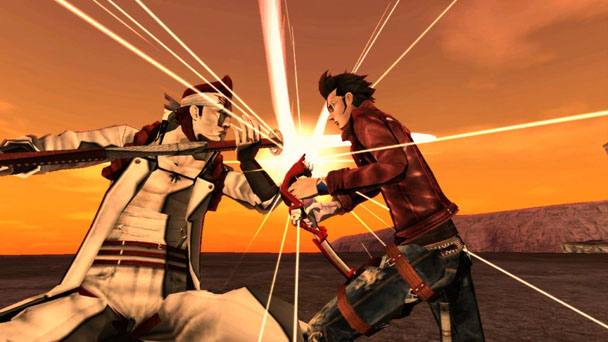
No More Heroes 2: Desperate Struggle: Working out some kinks in the game mechanics from the first installment, Suda 51 has returned Travis Touchdown to the heat of battle. This time around, Travis isn't in it to win Sylvia - he's climbing the ranks of world-renowned assassins to seek revenge. There's a ton of blood, but it comes across as surprisingly cohesive with the overall art stlye of the game, and the soundtrack is fantastic to boot. Despite a few bumps along the way, Desperate Struggle is a blast to play and one of the best action-adventure titles for the Wii. My rating: 9.25
Dynasty Warriors Gundam: A hack-and-slash fest with Bandai's popular mecha series skinned over everything, this title is surprisingly enjoyable though not particularly deep. The gameplay is incredibly repetitive, but each pilot/Gundam has their own unique attacks, strengths, and weaknesses. The original story is creative, though a bit cheesy, while the classic battles reenacted from various series do a better job of wrapping players up in the experience. Dynasty Warriors Gundam isn't by any means fantastic, but it's one of the better Gundam games released in recent years. My rating: 7.25
Hydro Thunder Hurricane: Not much has changed in the overall feel of Hydro Thunder since the original was released years ago, and that's great news for veteran fans and newcomers alike. The game's controls are intuitive and players can advance through higher difficulty levels. The biggest selling point in terms of replay value, however, are the number of various gameplay modes available, including gauntlets, ring challenges, championship races, and online multiplayer. My rating: 9.0
Dragonball Z Budokai Tenkaichi 2: While the gameplay is fluid and responsive, the cutscenes in the story mode were cooked up in a quick and lazy manner. The difficulties in the story mode are incredibly unbalance, but nearly perfectly balanced in the duel and tournament modes. As with most fighting games, each character is granted his/her basic set of attacks, but there is enough variation throughout to keep things interesting. My rating: 7.75

Final Fantasy XIII: Easily the single best looking game I've ever seen, FFXIII manages to stack its gameplay and story high as well. The characters are an interesting group thrown together by circumstance, and while each player will have his/her favorite, every one of the characters (of both major and minor roles) plays an important part in the grand scheme of things. The paradigm shift system works flawlessly, though some character roles will be more important earlier in the game, and others more important later on. The game is incredibly long, but if players are patient and put the time into it, I think they'll find FFXIII to be a thoroughly enjoyable gaming experience. My rating: 9.5
Halo: Reach: Bungie's swan song to their most famous series is most full a package out of any of the Halo titles, and easily one of the best FPS games for this generation of consoles. Aside from a decent length campaign that pays homage in each level to it predecessors, gamers are given the online multiplayer that has made Halo so popular over the years, a more complete version of the firefight mode introduced in ODST, and nearly limitless options for creating maps in forge mode. The graphics are phenomenal, the soundtrack epic, and the voice acting top-notch. The level of customization in terms of the in-game SPARTANs and the various thumbstick/button layouts will cater to just about any player's personal preference. My rating: 9.25
Bioshock 2: The first title was a hard act to follow, but despite my anxiousness for the release of 2K's sequel, it succeeded tremendously in carrying on the story of Rapture and further exploring the city and ideals of Andrew Ryan. Narrating the events through the eyes of Subject Delta, one of the first Big Daddies, the storytelling feels much more fluid even if the plot itself feels slightly less original than in the original Bioshock. A few tweaks here and there to the game mechanics might not have seemed necessary at first glance, but the gameplay benefits greatly from these. Throw in an online multiplayer mode that is as enjoyable as it is strategic and you've got a phenomenal sequel to what is quite possibly the best title released for this generation's consoles. My rating: 9.5
DLC
- Protector Trials: 9.0
- Minerva's Den: 8.0

No More Heroes 2: Desperate Struggle: Working out some kinks in the game mechanics from the first installment, Suda 51 has returned Travis Touchdown to the heat of battle. This time around, Travis isn't in it to win Sylvia - he's climbing the ranks of world-renowned assassins to seek revenge. There's a ton of blood, but it comes across as surprisingly cohesive with the overall art stlye of the game, and the soundtrack is fantastic to boot. Despite a few bumps along the way, Desperate Struggle is a blast to play and one of the best action-adventure titles for the Wii. My rating: 9.25
Dynasty Warriors Gundam: A hack-and-slash fest with Bandai's popular mecha series skinned over everything, this title is surprisingly enjoyable though not particularly deep. The gameplay is incredibly repetitive, but each pilot/Gundam has their own unique attacks, strengths, and weaknesses. The original story is creative, though a bit cheesy, while the classic battles reenacted from various series do a better job of wrapping players up in the experience. Dynasty Warriors Gundam isn't by any means fantastic, but it's one of the better Gundam games released in recent years. My rating: 7.25
Hydro Thunder Hurricane: Not much has changed in the overall feel of Hydro Thunder since the original was released years ago, and that's great news for veteran fans and newcomers alike. The game's controls are intuitive and players can advance through higher difficulty levels. The biggest selling point in terms of replay value, however, are the number of various gameplay modes available, including gauntlets, ring challenges, championship races, and online multiplayer. My rating: 9.0
Dragonball Z Budokai Tenkaichi 2: While the gameplay is fluid and responsive, the cutscenes in the story mode were cooked up in a quick and lazy manner. The difficulties in the story mode are incredibly unbalance, but nearly perfectly balanced in the duel and tournament modes. As with most fighting games, each character is granted his/her basic set of attacks, but there is enough variation throughout to keep things interesting. My rating: 7.75

Final Fantasy XIII: Easily the single best looking game I've ever seen, FFXIII manages to stack its gameplay and story high as well. The characters are an interesting group thrown together by circumstance, and while each player will have his/her favorite, every one of the characters (of both major and minor roles) plays an important part in the grand scheme of things. The paradigm shift system works flawlessly, though some character roles will be more important earlier in the game, and others more important later on. The game is incredibly long, but if players are patient and put the time into it, I think they'll find FFXIII to be a thoroughly enjoyable gaming experience. My rating: 9.5
Halo: Reach: Bungie's swan song to their most famous series is most full a package out of any of the Halo titles, and easily one of the best FPS games for this generation of consoles. Aside from a decent length campaign that pays homage in each level to it predecessors, gamers are given the online multiplayer that has made Halo so popular over the years, a more complete version of the firefight mode introduced in ODST, and nearly limitless options for creating maps in forge mode. The graphics are phenomenal, the soundtrack epic, and the voice acting top-notch. The level of customization in terms of the in-game SPARTANs and the various thumbstick/button layouts will cater to just about any player's personal preference. My rating: 9.25
Monday, September 27, 2010
Xbox 360 review: Halo: Reach

Roughly three years after the conclusion of Master Chief's story in Halo 3, Bungie has released Halo: Reach, the final Halo title to be developed by the company. For those not familiar with the game, Halo: Reach is a prequel to the original Halo. Players are given control of Noble Six, a SPARTAN-III and the last surviving member of his team, as he is transferred to Noble Team to fight the Covenant in the final days before the planet Reach was glassed.
*[NOTE: In the images below, my Noble Six is wearing recon armor. The armor will differ depending on how you customize your Noble Six character.]
The campaign plays out much like a greatest hits with each mission feeling unique to Halo: Reach, but carrying a sense of familiarity. ‘Tip of the Spear’ is reminiscent of Halo 3’s ‘Tsavo Highway’ and ‘The Ark’, and the latter portion of ‘Long Night of Solace’ akin to the original Halo’s ‘The Truth and Reconciliation’. Even Halo 3: ODST gets a bit of a nod in the mission ‘Exodus’. Players are granted more freedom in how they go about completing certain missions, but at the same time the game requires them to be more strategic than in previous titles. The normal and easy difficulties provide a similar challenge as in Halo 3, though the Heroic and Legendary difficulties will truly challenge players without being unfair or downright aggravating.

The members of Noble Team each have a distinct personality, and the only one left the least fleshed out is Noble Six. This is likely because Bungie wanted to let players customize their experience and leave Noble Six’s personality up to interpretation. Still, he/she shows more emotion than Master Chief did in pretty much any of the other Halo games and it’s nice to see that Bungie mixed things up a bit. As for the rest of Noble team, Carter - the team’s leader – come across as simply following orders at first, but it becomes apparent later on in the story that he does care for the safety of his team members despite the fact that isn’t always the best at expressing this. Kat is perhaps the most valuable member of the team as specializes in hacking and data retrieval, and is more than capable of holding her own against covenant forces. Emile is cynical and seems to have the most difficult time getting along with others, though his skills in close-quarters combat prove invaluable. Jun is a bit of a chatterbox but one of the most entertaining characters in Halo: Reach, as he tends to keep a positive light on things while remaining focused on his mission. He is the team’s designated Sniper and can provide the team cover from a Falcon transport circling the area or from the ground. Jorge is built like a tank and is the only SPARTAN-II among the group, having seen years of service. He is well-versed in different languages and is by far the compassionate member of Noble Team.
Dr. Catherine Halsey, a pivotal character in the Halo novels, plays a significant role in the events that unfold throughout Halo: Reach. A number of guest appearances occur as well, tying the story into the core Halo storyline. There are a few things left unanswered to players, such as how the Covenant were able to discover Reach and land on the planet undetected. The novel The Fall of Reach could clear things like this up for players, but at the same time they shouldn’t have to look this sort of thing up to understand what’s going on in the game. That said, it’s relatively minor in the grand scheme of things. The story is genuinely gripping and emotional at many points, making it the best campaign in a Halo game, as well as one of the best in any FPS title.
The game’s graphics are stunning and it seems that Bungie went a slightly different route with the art style in Reach than they did in Halo 3. Halo 3’s characters were portrayed in a style that was semi-realistic but had a hint of cel-shading. In Halo: Reach, everything looks realistic, from the character models to the UNSC ships to the planets on Reach’s horizon. Marty O’Donnell and Michael Salavatori have released yet another fantastic soundtrack to accompany the gameplay, with variations on a number of familiar Halo themes.

Aside from the campaign mode, players are given quite a few reasons to stick with the game for some time to come, most notably the multiplayer, which the Halo franchise has largely been popularized by. New to Reach’s multiplayer is the inclusion of loadouts, which vary depending on gametype. These grant players use of two weapons upon spawning (one weapon in rare cases) as well as equipment (which are no longer scattered around the maps as they were in Halo 3). Players are still able to swap out weapons with those on any given map in-game, and can switch up their loadout prior to respawning. The new assassinations are entertaining but players might want to think about their surroundings before sneaking up and stabbing an enemy, as the animated assassination leaves them exposed for a brief few seconds. While there is little to complain about in terms of the variety of weapons at players’ disposal, I find it likely that Bungie will release an update in the near future to adjust the headshot accuracies, which (at present) seem to be based more on luck than skill once a player’s shields have been brought down.
The number of maps included on the disk is a bit of a disappointment, especially considering that nearly half of the maps are straightforward remakes from Halo 2. The ability to veto gametypes in the matchmaking pregame lobby returns, though this time around players are given the option to vote from three gametypes or choose ‘none of the above’ (upon the latter choice, the game will select three new gametypes that players must then choose from). The exp. System from Halo 3 - wherein players would earn single exp. Points per game won - has been exchanged for a progression system in which players earn more points based on performance, completing challenges, and earning commendations, but will still earn points simply for participating in a match. These points can then be exchanged to unlock armor permutations and Firefight voices.

Returning from Halo 3: ODST is Firefight mode, in which waves of enemies are sent at players. Players can tackle Firefight in three ways. Traditional Firefight is accessible through the main menu and allows players to take on the Covenant by themselves, allowing them to customize loadouts, difficulty level, the number of enemy waves players will be facing, and the enemy/player attributes. Firefight matchmaking puts four players in a game and requires them to take out the Covenant forces before a certain time limit runs out (generally ten minutes). Gametypes include traditional Firefight, Sniperfight, Rocketfight, and Generator Defense (in which players prevent Covenant forces from destroying a number of generators). Finally, Score Attack pits one player against waves of Covenant forces (much like non-matchmaking Firefight) and ranks the endgame score on a community leaderboard.
Forge mode is back from Halo 3 and has seen a major overhaul in user-friendly aspects. No longer is flipping pieces about a hassle, thanks to the inclusion of degree turns. Players can fine-tune the specific location of Forge pieces by zooming in, and can even set the object to ‘fixed’ or ‘phased’, leaving the object hanging in midair or allowing it to phase into another object respectively. Buildings can be changed in color for designation to the different teams. The majority of Forging will take place in Forge World, an enormous area built by Bungie with certain areas set up as the beginning environment of a map, but ultimately the final outcome is limited only by players’ imaginations.

Halo: Reach is the culmination of many of the best elements of previous titles in the series. Some could say the game returns to the roots of Halo, but that wouldn’t be entirely accurate as there are plenty of inclusions from Halo 2, Halo 3, and even Halo 3: ODST that make the gameplay so fluid. With past Halo titles, I felt that they were somewhat overrated and hyped too much. But Reach is the complete package, providing tons of playability, superb graphical and musical achievements, and one of the best FPS campaigns around. In short, Halo: Reach is a title that belongs in the library of any Xbox 360 owner.
My rating: 9.25 (out of 10)
Labels:
Bungie,
FPS,
game review,
Halo,
Halo: Reach,
Xbox 360
Subscribe to:
Posts (Atom)