.

.
Showing posts with label Knights of Sidonia. Show all posts

Monday, December 29, 2014

Top 5 Anime of 2014

As in years past, I have compiled my end of the year selections for my five favorite anime that I viewed in 2014.  Not all of these anime were in fact released during 2014, though each was released and aired within the past couple of years, and a few of these saw a run that carried on through 2014.  As with my top ten video game selections of the year, my rankings for these five best-of-the-best anime bears little correlation to the ratings I gave to each in my full review posts - rather, they are the five anime that I enjoyed most, and the five which left some noteworthy impact on me as a viewer. 


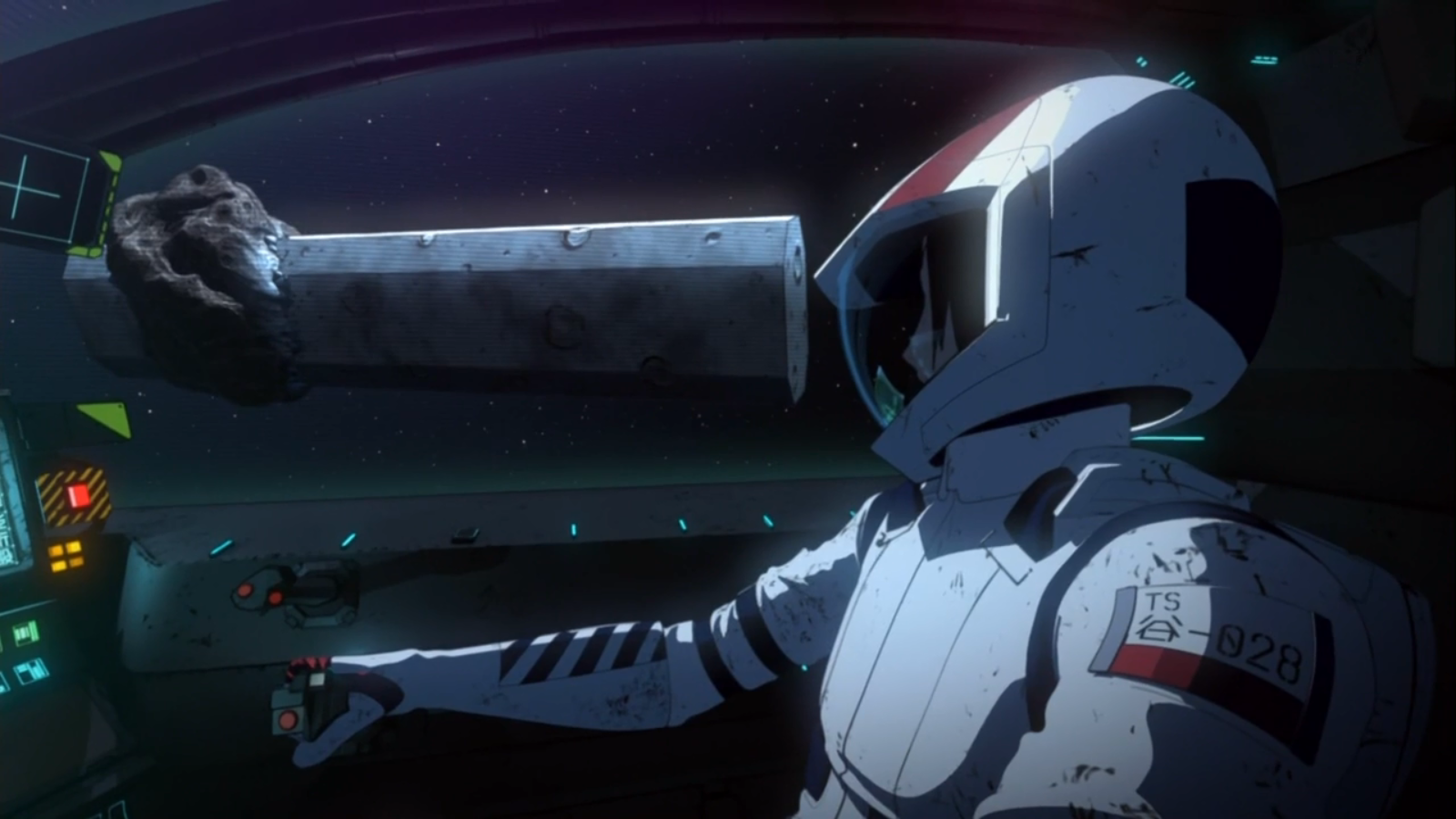
#5) Knights of Sidonia: Offering a more gritty and dire take on the mecha genre than many of its bigger-name contemporaries, Knights of Sidonia knows how to get from point A to point B in a timely manner, while still exploring enough individual stories that branch out from the core plot.  The scientific advancements made since mankind took refuge among the stars are curious and compelling, if not mildly inconsistent, but the way in which these play off the otherwise outdated tech and cramped living conditions for what are, in all likelihood, the last remaining humans, does well to balance the thriller, drama, adventure, and classic science fiction components.  If only the basic motions of the main cast members’ character models looked half as good as the Garde Unit mechs did when battling the parasitic and ever-adaptive Gauna, this series might have ranked a bit higher on this list.

#4) From the New World: Often times, the whole ‘post-apocalyptic’ subgenre gets stuck in a routine of desolate worlds decorated with litter more than ruins.  How much a breath of fresh air, then, was From the New World, which depicted not only a prospering society, but one which had performed an odd return to ancient technologies and lifestyle.  The strict, often shady rules of this future-past culture incorporate dystopian themes, while the science of the world is largely centered around the esper humans reserving their powers for practical uses that will better the whole community.  From the New World is very smart in its scripting, even though the emphasis on certain plot points might not make their importance known until many episodes later.  Other contemporary science fiction and fantasy anime would do well to learn a thing or two from this series’ careful planning.

#3) Puella Magi Madoka Magica: I admit, I was quite skeptical going into this series.  A number of people had talked it up as being a real game-changer for the magical girl genre – a genre that I was not particularly fond of – but Madoka Magica is much more than that.  Its twelve episode run delivered just the right number of twists and turns to keep me hooked from start to finish, and was fueled by some of the most genuine and raw emotion I’ve encountered in an anime yet.  It’s a dark and depressing tale, but in a similar fashion to Evangelion, it is multi-layered in its themes, yet ever-mindful of tying the narrative threads together for an impactful endgame.  Sometimes the saddest stories deliver the best development for both plot and character, as evidenced by Puella Magi Madoka Magica.

#2) Jojo’s Bizarre Adventure: Stardust Crusaders: While the first season adapted the first two parts of the Jojo’s Bizarre Adventure manga impeccably well, they were, to a certain degree, always serving to set up the most popular Jojo’s story arc, Stardust Crusaders.  It’s no surprise why Stardust Crusaders has been so well-received since its debut twenty-five years ago – the cast of Jotaro, old man Joseph, Avdol, Kakyoin, and Polnareff makes for quite a raucous crew.  Regardless of how dire the circumstances or rotten the foe, Jotaro and company always manage to turn the situation back to their favor, with plenty of intense action and hilarious shenanigans along the way.  The Stardust Crusaders arc masterfully handles just what a long-running action series should be about – having fun, balancing the action and comedy, and knowing how to properly pace the story for fans new and old.

#1) Mobile Suit Unicorn Gundam: Unicorn Gundam is both a return to form and a push forth into bold new territory for Bandai and Sunrise’s long-running franchise.  I’ve stated in the past that I find the Gundam OVAs are typically among the most high-quality offerings from the franchise, and Unicorn Gundam is unquestionably among the best Gundam projects of all-time.  It has a large cast to juggle, and yet it handles each individual appropriately, shaping them as pieces of a more complex puzzle over the course of its seven (approximately) hour-long episodes.  It’s a love letter to Gundam fans new and old – one that is certainly among the most easily accessible for new viewers who have little understanding of the chronology of the Universal Century, but one that is also chock-full of references and ties to previous Gundam works like Char’s CounterattackZZ, and the original Mobile Suit Gundam that kicked off this definitive mecha franchise way back in 1979.

Monday, December 1, 2014

Anime review: Knights of Sidonia


A thousand years after humanity encountered the shape-shifting parasitic force known as the Gauna, the Solar System has long-since been destroyed and mankind finds itself adrift amongst the stars in the giant city-ship Sidonia. While historical records indicate that Sidonia did, at one point, have contact with other ships harboring their own large populaces, it’s been more than one hundred years since the last recorded contact, and to the knowledge of all those living on Sidonia, they may very well be the last surviving remnants of the human race. This theme of being somewhere between the end of days and in search of a new horizon perpetuates a unique atmosphere for the twelve-episode anime. While Sidonia has gone without a Gauna encounter for quite some time, this peace is interrupted by the foe’s re-emergence, and Sidonia’s nature as a military fortress is made clear within the first couple of episodes. Young cadets board mass-produced and somewhat outdated mechs called Gardes, armed with spears of a particular material known to instantly kill a Gauna if pierced through the correct part of their amoebic body.

The theme of a stranger in a strange land is not uncommon to limited run science fiction works such as Knights of Sidonia, and main character Nagate Tanikaze finds he must venture forth from the seclusion of the undercity in order to find food following his grandfather’s passing. Wholly unaware of the lives led by those in the burgeoning vertical city of Sidonia, Nagate’s introductions to his young pilot peers and Sidonia’s chain of command are jarring, to say the least. In the time mankind has been away from Earth, some bold scientific advancements have been made – some resulting from evolutionary processes, others self-induced. To accommodate for the large population on a ship such as Sidonia, its citizens have undergone cellular alteration that allows them to photosynthesize for nutrition, only needing to eat actual food once per week. Meanwhile, a third androgynous gender has emerged, one that does not take on the attributes of either the male or female sex until such an individual has become romantically paired to a partner.


While Knights of Sidonia received its TV-MA rating primarily for its degree of bloodshed and brief sequences of borderline-nudity, more carefully plotted and interesting additions to the world that is being crafted within the series provide viewers with a more concrete idea of how Sidonia’s people behave on a daily basis. One such gender-neutral individual is Izana Shinatose, who early on becomes friends with Nagate, and the interactions Izana has with his/her peers are sometimes very casual and relaxed, while at other times, he/she is judged as strange and even lesser because of his/her physical differences. It’s great to see contemporary themes worked into a setting so far-removed from the modern day, and pairing Nagate and Izana together helps them to grow as characters, and the story to become both more complex and engaging.

A group of their classmates/fellow pilots in-training are all clones of one another, a group of sisters who rarely travel without one another’s company. While Nagate and Izana appear to be in their late teens, the veteran pilots who are touted as being the best of the best look only ten years their senior, due in large part to the generally low life expectancy of Garde pilots. After his first couple of outings in an older but seemingly special Garde unit dubbed Tsugumori, Nagate finds he is the talk of the town, so to speak, as many of the veteran Garde pilots are impressed not only by his ability to handle the mech with such precision, but also his triumph over the first Gauna he encounters. Not everyone is impressed with Nagate’s performance, however, as rival Norio Kunato believes it is his rightful position to be the ace pilot and hero of Sidonia.

As Nagate’s streak of success continues, the people of Sidonia and his fellow Garde pilots become simultaneously more comfortable in their constant routine of winning battles, and more critical of Nagate’s performance. Should one of his squad members become injured or even killed in action, the immediate response from some of Nagate’s peers is to point the finger at him for not doing enough to protect them, regardless of how insurmountable the odds may have been. And while Nagate certainly finds himself at a crossroads of frustration and personal confusion, voicing his concerns to his superiors, he continues to grow as a stronger person through this series of physical, mental, and emotional stressors and traumas.


Knights of Sidonia employs a visual style not uncommon with contemporary anime, placing 3D cel-shaded character and mech models in more traditionally-drawn environments. The gold glow of Sidonia’s industrial center is a stark contrast to the dark blue depths of its artificial ocean, while the bleakness of space is interrupted by icy mining sites and the massive size of the space-faring Gauna. These foes are able to absorb various life forms and take on both physical and behavioral qualities, resulting in some horrifying and twisted mockeries of human forms facing down the Garde pilots. The Gauna’s primary means of attack may be to lash out with whip-like tentacles, but should they bear the faces or even voices of fallen comrades, the psychological impact it has on pilots is abundant in their hesitation and fear as they attempt to defend their home ship.

The Garde mecha bear design points sleek and modern, as well as some boxy and obtuse, lending a unique look that makes them stand out more noticeably in what is often an over-saturated genre. Oddly enough, the character models do not display as smooth of motions as either the Garde units or the Gauna. Nagate, Izana, and the rest of the people living on Sidonia are characterized by frequently jerky motions, whether under the constraints of gravity or freely floating in zero-g. Their facial expressions are highly animated, but only do so much to distract from this setback in production value. While the writing is generally pretty solid, there are a handful of moments that reduce the degree of immersion significantly, such as when everyone on board Sidonia is asked to brace for evasive maneuvers and apparently all they have to strap themselves in with are thin cables attached to their belts that they are expected to clamp onto the nearest piece of railing or pipe. Even if Sidonia is something of a relic given the hundreds of years since it set course for the stars, it's a bit hard to believe that the engineers of such a massive ship intended to support a metropolis-worth of people would not have the means to strap down boxes and supplies, let alone its local populace.


On the whole, though, Knights of Sidonia is handled quite well. It knows just how much time to allot to each plot point, even if the relevance of each of these is not abundantly clear at the point of their initial presentation. The characters are limited to a select group of major players, a few of whom do fall into the tropes of absent-minded scientist and jealous girl seeking affection of a popular guy. The supporting cast, meanwhile, is developed just enough to be decently interesting and open potential subplots for future seasons, but are not given so much time in the spotlight that the series detracts from its primary focus in weaving the story of Nagate as Sidonia’s new hero, its knight. Knights of Sidonia also does well in not stretching its multiple plotlines too thin, having a proper endgame in mind for each and every major one by the time it reaches its conclusion, though some of the less prominent story elements may linger to set the stage for another season.

My rating: 8.25 (out of 10)
Related Posts Plugin for WordPress, Blogger...