.

.
Showing posts with label Oblivion. Show all posts

Sunday, May 17, 2015

Top 5 Story-Driven DLC Releases


#5 – Citadel (Mass Effect 3): Effectively a love letter to longtime fans of the Mass Effect trilogy, Citadel is the lengthiest, most expansive piece of post-release DLC. It’s also the cheesiest, story-wise, but in a way that embraces some of the series’ goofier moments, with a borderline-cliché plot of Commander Shepard being dogged by a squad of assassins, led by none other than a clone of the famed human protagonist. The story sees Normandy crew members new and old band together for extravagant shootouts and a feelgood party, while visits to new areas of The Citadel allow Shepard to take part in arcade games and make small talk with his comrades-in-arms. It’s a beautiful culmination of everything Mass Effect has worked to become over the years, from the impending showdown with the Reapers, the illicit activities of Cerberus, the bonds forged with alien pals, and Shepard’s iconic awkward dance moves.


#4 – The Shivering Isles (The Elder Scrolls IV: Oblivion): A visit to the ethereal realms of mania and dementia sees you, the hero of Cyrodiil, called upon by the island’s resident governor and madman Sheogorath to stop the Greymarch and subsequent rise of Jyggalag, an entity which seeks to destroy this fever dream of a kingdom. Every dungeon you explore and every task appointed to you feels like part of a larger, breathing world, all of which is a massive improvement over the core game of The Elder Scrolls IV: Oblivion, wherein the sidequests felt more carefully plotted than the core campaign against the Daedric princes. Sheogorath and his subjects are a wacky, sometimes unnerving bunch, and the general bizarreness that emanates from this place does well to instill memories that will stick with players long after they’ve returned to the larger world of Cyrodiil.


#3 – Lair of the Shadow Broker (Mass Effect 2): While Liara T’Soni is reverted to a supporting role for the duration of Mass Effect 2, taking on the Lair of the Shadow Broker DLC mission explores the dangerous web she has willingly walked into in an effort to track down the elusive individual known as the Shadow Broker. Liara’s hope is that she can find a solid enough lead through one of the Shadow Broker’s many associate assassins and smugglers to pinpoint the titular antagonist’s location in the vast sea of stars, but when a loyal friend and confidant of hers goes missing, she turns to Shepard for help. The pacing of Lair of the Shadow Broker is nigh-on breakneck, the stakes high, and the storytelling intense – it proves nothing short of one of the greatest plotlines within the larger Mass Effect narrative.


#2 – Lonesome Road (Fallout: New Vegas): No point in my playthrough of Fallout: New Vegas led me to feel so alone or made the world appear so desolate as the final piece of DLC, Lonesome Road. A proper sendoff to the irradiated wild west RPG, Lonesome Road sees The Courier called to The Divide, a land which he holds deep ties to, though he does not entirely recall the valley’s importance. And who should invite him there but Ulysses, one of the game’s most compelling, complex, and intimidating characters – one whose actions hold significant repercussions on the larger world, though they can, of course, be swayed through dialogue options (or more physical confrontation) by The Courier, as per Fallout tradition. Despite the lengthy walk through decayed cityscapes and along crumbling highways littered with nuclear warheads, the threat that looms at the end of Lonesome Road makes the very air of this experience a curious combination of haunting and dire.
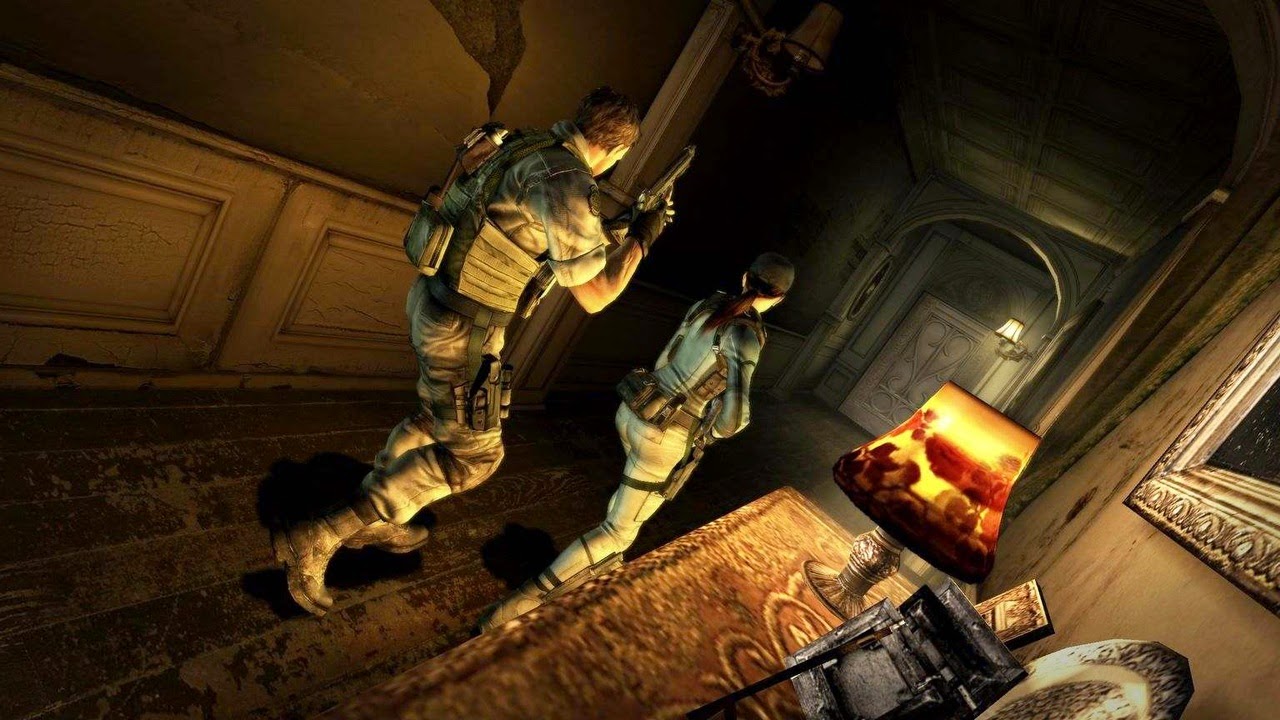

#1 – Lost in Nightmares (Resident Evil 5): If you ever wondered what the original Resident Evil might have looked like with the graphical prowess of modern consoles, Lost in Nightmares has a terrifying treat for you. Sporting better lighting effects and an environment filled with more fully-rendered assets than the Gamecube remake of Resident Evil, Lost in Nightmares is perfectly paced, and emphasizes puzzles as well as limited combat with a small number of key enemies leading up to the ultimate, more action-heavy showdown with infamous series villain Albert Wesker. Above all else, Lost in Nightmares rekindles the thematic of horror that first put Resident Evil on the map, and is easily the most impressive release tied to Resident Evil 5.

Sunday, December 18, 2011

DLC review: The Elder Scrolls IV: Oblivion - Shivering Isles


After a mysterious portal opens up on an island in the middle of Niben Bay, players are granted the ability to travel to the Shivering Isles. This new region, ruled by Sheogorath, is split into two halves. The Mania portion is governed by Duke Thadon, who takes pleasure in his experiences with mind-altering drugs. The inhabitants of this portion of the island are often paranoid, though cheerful enough when compared to the depressing lot that inhabits the Dementia side. Some of the Dementia citizens even express a desire to kill Duchess Syl, plotting with one of her own guards.

The Shivering Isles are nowhere near as large as the main game's realm of Cyrodill. Still, both the Mania and Dementia halves host a significant number of sidequests, and the realm itself is teeming with life - citizens and monsters alike. The enemy designs are some of the most creative in the entire Oblivion package, and many present a much more tactical dynamic to combat. The characters are quite diverse, even though there are only a handful that are key to the main storyline, and this shows just how much extra effort Bethesda put into this DLC.

The story follows the same main character from Cyrodill, as Sheogorath has him travelling around the Shivering Isles in an attempt to stop Jyggalag and the Greymarch from taking over his lands and bringing an end to his time as ruler. As Sheogorath informs players, this is a cycle that happens at the end of every era, and he is determined to bring it to a halt. None of the missions last particularly long, though the dungeon areas exhibit a strong balance of tactical combat and clever puzzles.

About halfway through the main quest, players must make a decision to align themselves with one side of the island or the other. During this portion of the quest, as well as a couple of segments that follow thereafter, players will be accompanied by either the Golden Saints or the Dark Seducers (depending on their alignment). These AI companions prove both stronger and more competent than the forces that gathered at Bruma toward the end of the main storyline of The Elder Scrolls IV. The commanding role also presents a nice change of pace from the early missions of dungeon-crawling solo.

The Shivering Isles have some of the most beautifully rendered environments in the Oblivion universe, with half-sunken villages and giant mushrooms twisting their way toward a skybox decorated with a nebula of red and violet hues. Sheogorath also proves the most oddball, yet lovable character in the game. He constantly greets the character in a cheerful manner, yet follows up with a bizarre "Come back again soon, or I'll pluck out your eyes!"

In short, Shivering Isles is a great DLC package. It has a fantastic balance in its gameplay, quirky characters, and a storyline that is honestly better than the main questline of The Elder Scrolls IV. It's a curious look into what chaos and order mean for an inverted world. Players will have a number of reasons to care about the main quest and be thoroughly engaged. Plus, they might find a few really cool additions to their arsenal along the way.

My rating: 9.25 (out of 10)*

*(rating applies solely to downloadable content, not its inclusion with the content on the original game disc or other downloadable content)

Wednesday, December 14, 2011

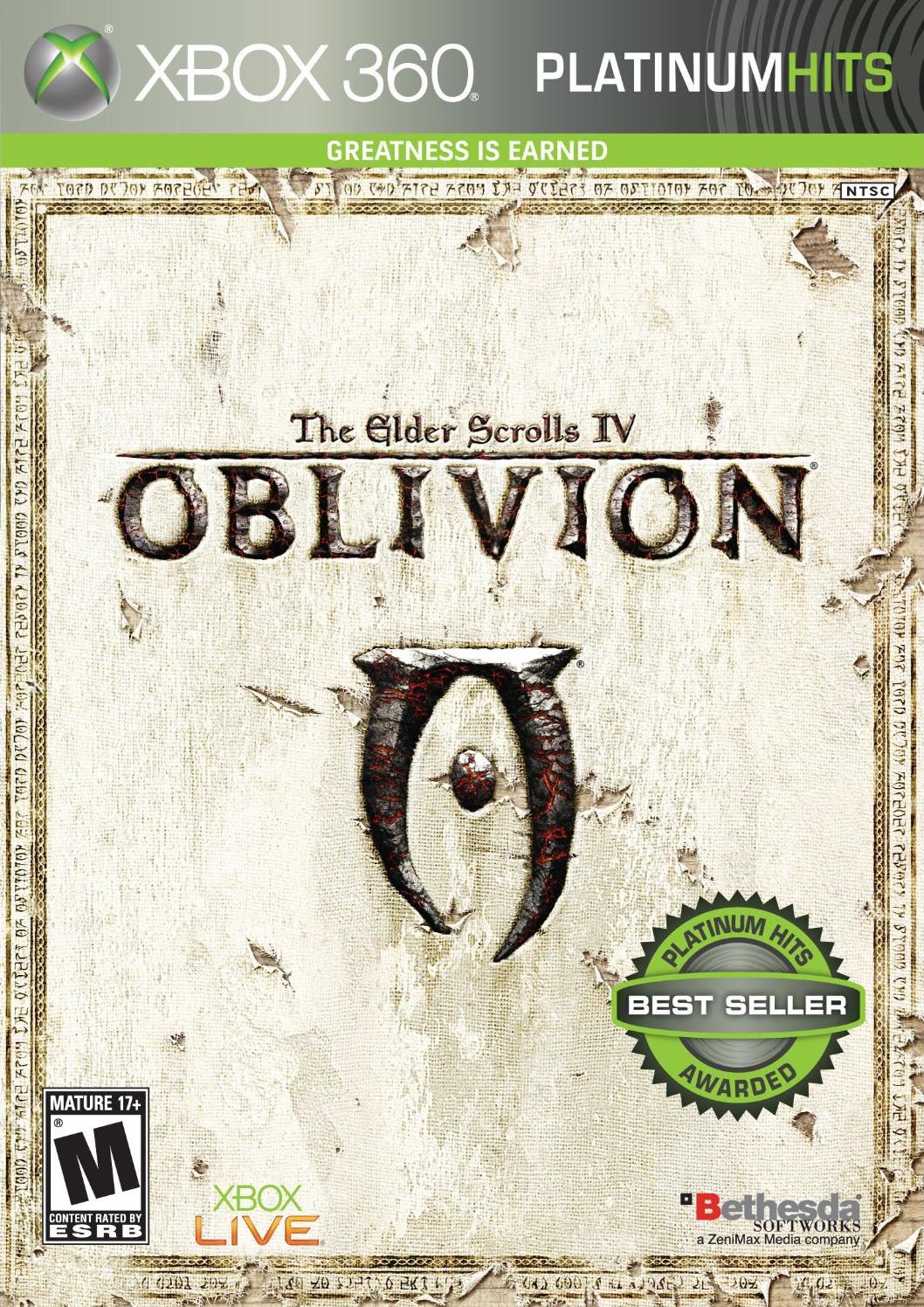
Xbox 360 review: The Elder Scrolls IV: Oblivion


The story of The Elder Scrolls IV opens with the player-controlled character locked in a cell in the Imperial City. Here, players will determine their race and physical attributes, as well as special skill sets based upon a star sign. Before players can begin their adventures in Cyrodill, they must first escort Uriel Septim, current emperor of the land, through a network of underground tunnels as they evade the assassins of the Mythic Dawn. As it so happens, the entrance to this escape route begins in your very own prison cell, and Uriel Septim believes this is no coincidence. All off this acts as a rather lengthy combat tutorial, though players can just as easily let the AI Imperial Guards take to the forefront of combat.

As Uriel's final moments draw near, he asks the player to seek out Martin, the next in line to claim the throne. Leaving through the sewers, players will emerge unharmed and now free to roam about the hills, mountains, plains, and forests of Cyrodill. Players now have the freedom to choose to engage in the main story, or to spend time tackling sidequests, and there are benefits to both. The main story introduces players to key areas and can often reward them with powerful weapons and armor found in the dungeon areas. The sidequests take time, but will yield results in the form of experience to increase skills as well as some small treasures that can be sold.

There is some nice variation in the architectural style and geographic layout of the various towns players will visit during their journeys. Some are more memorable than others, like the snow-laden cabins of Bruma and the stacked wooden houses that line the trench river in Bravil. But as a whole, the artistic direction of the game sets players in a rather generic medieval fantasy world. Which is not to say there is nothing to do there, with an abundance of optional sidequests at their disposal.


The sidequests - most notably the major ones of the Dark Brotherhood and the Mages, Fighters, and Thieves' Guilds - will make up the bulk of the gaming experience in terms of time and variety. The main storyline pales in comparison to any one of these. The protagonist's aiding Martin doesn't make for a downright terrible narrative, but it isn't until approximately two-thirds of the way in that the narrative becomes genuinely interesting. From there, things become really intense and action-packed, but everything leading up to it is a series of boring labyrinth searches, wherein players will be accompanied by AI-controlled Jauffre, whose tendencies to charge headlong into battle prove more of a burden than a help.

The game's management system is pretty straightforward. Weapons, armor, and alchemic ingredients are all allocated to one section of the menu, while sidequests and the world map are on another. The third and final set of tabs details character abilities, skill levels, and their special attributes that come with whatever star sign players choose at the beginning of the game. This format provides ease of access to anything players might need to review during their journeys.

The level-up system isn't very involved. So long as players keep hacking away at enemies, they will increase their skill in arms combat after a predetermined number have been killed. The same goes for number of jumps made to increase agility, and number of locks opened to increase security. Games like thos in the Final Fantasy series would encourage players to spend their experience points with the knowledge of what skills will benefit them in particular ways, but Oblivion doesn't give many pointers in this department. Instead, it touches briefly on the combat skills, which will be key to the main story. As far as the rest are concerned, they will only be explored in the sidequests.


Aside from the first gate at Kvatch and the final Great Gate, the Oblivion Gates scattered across Cyrodill are completely optional. Most of them have a similar layout, with some of the ones encountered deeper in the wilds being larger than those nearest the towns. The gates are home to Daedric Princes, some of the most clever AI enemies in the game, as well as some of the most versatile monsters. The towers and gates present players with some of the game's best puzzle elements. After they have acquired a Sigil Stone and destroy its respective Oblivion Gate, players will generally find their skill sets to have received a substantial boost. It may not always be in the best interest of players to tackle an Oblivion Gate, but the results are certainly worth the time and effort.

For one of the earliest major releases on the Xbox 360, The Elder Scrolls IV: Oblivion looks very good. By today's visual standards, it hasn't aged particularly well, though the water effects are still convincing enough. The skybox, on the other hand, is still one of the most gorgeous in any game in recent memory. the soundtracks presents a beautiful contrast of epic military fanfare with soothing, mystical melodies. The gameplay is pretty fluid, though enemies tend to stick to a few tactics, often favoring the 'charge headfirst' method. The story is quite strong, though players may find themselves largely disinterested until the latter portions amp it up.

My rating: 8.0 (out of 10)
Related Posts Plugin for WordPress, Blogger...